Airport Transfer Hamburg: S1, Taxi or Private Car to HAM
Hamburg makes this easier than most German airports: one S-Bahn line, one platform, no changing trains. The real decision sits elsewhere - luggage, the time of night, and how many of you are travelling.

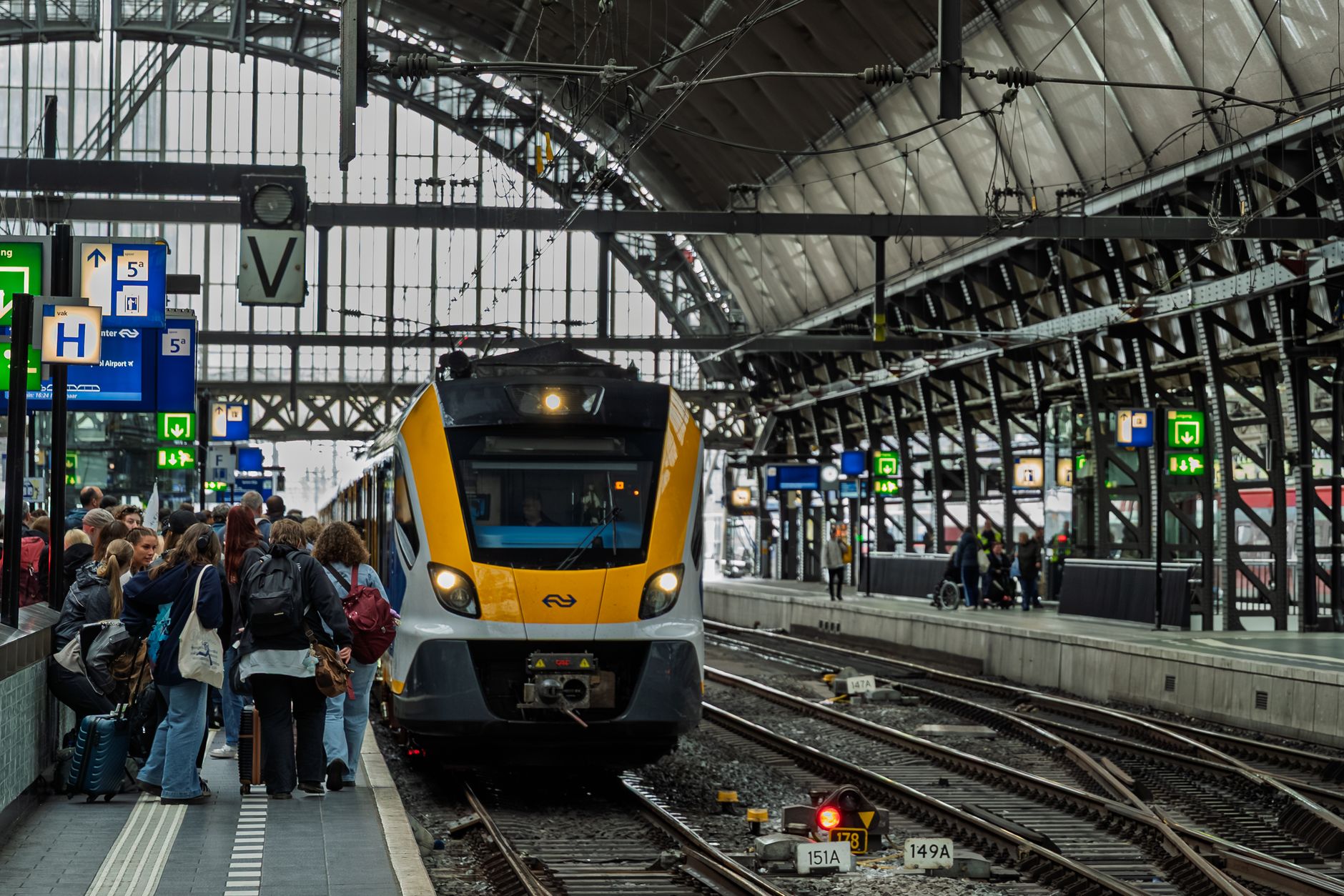
Hamburg Airport sits barely nine kilometres north of the centre, right in the Fuhlsbüttel district — closer to town than most major German airports manage. Officially it has been Hamburg Airport Helmut Schmidt since 2016, named after the former chancellor and Hamburg native. What matters more for your planning, though, is this: there is exactly one sensible rail connection, no second station to get confused about, and the choice between train, taxi and chauffeur really comes down to three questions — how much luggage you have, what time it is, and how many of you there are.
The S1: one train, no changing
The S1 suburban line runs straight from the airport into the centre without a single change. The ride to Hauptbahnhof takes around 25 minutes, and during the day the S1 runs every 10 minutes between 6am and 11pm, dropping to every 20 minutes outside those hours. The first train leaves the airport a little after half past four in the morning, the last one just after midnight, at 00:14 — more on that boundary shortly, because it matters.
What makes the line unusual is that it does not stop at Hauptbahnhof. It carries on through Landungsbrücken, Reeperbahn, Königstraße and Altona all the way to Blankenese and Wedel. If you are staying near the Reeperbahn, in Altona or out in Blankenese, you need no change at Hauptbahnhof at all — you simply stay on the train. That is different from many other German airports, where the rail link terminates at the main station and you have to board a second service from there.
The platform, Hamburg Airport (Flughafen), sits directly beneath both terminals and is reached by lift, escalator or stairs — no shuttle train, no separate long-distance station. That sets Hamburg apart from airports that need an additional people-mover system to bridge terminal and station.
Tickets: what the ride costs
For the S1 you pay the standard HVV fare, with no airport surcharge. A single ticket for the Hamburg AB zone costs around €4.10 per person and direction as of 2026 — the airport run falls within the large zone rather than a special tariff area, unlike some other transport networks. The €2.10 short-hop ticket does not cover enough stops for this journey.
One practical point: if you already hold a Deutschlandticket, you need nothing extra — the S1 to the airport counts as local transport and is covered automatically. For several trips during your stay, or for a group, day tickets or group tickets are worth a look, since they often undercut the sum of several single fares. Buying through the HVV app or online shop also carries roughly a 7 per cent discount over the machine on the platform — barely noticeable for one ride, but real across a family’s stay.
Getting to the airport at night: buses 606 and 292
The S1’s 10-minute frequency only runs until 11pm, and the last train leaves the airport at 00:14. If you land later, or need to check in very early, you need an alternative — and Hamburg’s handover is close to seamless: night bus 606 runs hourly from 00:15 to 04:15 between the airport, Langenhorn, Hauptbahnhof and Rathausmarkt. The gap between the last train and the first bus is a single minute, which looks less like coincidence than deliberate planning.
During the day, line 292 adds a further option towards U-Lattenkamp, via Langenhorn and the Lufthansa base, running from 05:31 to 23:53. That matters mainly if your destination is not Hauptbahnhof or somewhere on the S1 line but one of the northern districts — the bus is often the more direct route than changing through the centre.
Taxi from the terminal: fixed price or the meter
Taxi ranks sit right outside the arrivals areas of both Terminal 1 and Terminal 2 — no long walk, no car park in between. Depending on which part of the city you are heading to, the run into town covers roughly eight to fifteen kilometres, which is exactly the band where Hamburg’s tariff gets cheaper past the ninth kilometre. On the meter, including whatever waiting time rush-hour traffic adds, that typically comes to around €30 to €45 — the detailed kilometre-by-kilometre workings are set out in Taxi in Hamburg: the cost. How taxi tariffs otherwise differ between German cities is covered in Taxi fares in Germany.
Since February 2025 you have also been able to book a pre-ordered ride at a fixed price, which is particularly welcome straight after landing: the fare is agreed before you even get in, and traffic between the airport and town is no longer your risk. A ride hailed on the spot at the rank still runs on the meter.
Uber, Bolt and the app alternatives
Alongside the ordinary taxi ranks, Uber, Bolt and comparable operators also serve the airport, from their own pickup area, usually a short distance from the taxi rank and shown in the relevant app. On Hamburg’s UberX model — a roughly €3.50 base fare, around €2.00 a kilometre, and a minimum fare of €11 — a nine-kilometre run into the centre works out at about €21 to €22, assuming no surge pricing applies. The underlying formula and how it compares with the taxi tariff elsewhere in Germany is covered in Uber prices in Germany.
The catch with flights: at peak times, when several aircraft land in quick succession and everyone requests a ride at once, dynamic pricing often kicks in — and an app fare can end up dearer than the taxi’s fixed price. Check the quoted price before confirming rather than assuming the baseline figure will hold.
One point often missed: FreeNow, also active at the airport, dispatches mostly ordinary licensed taxis at the official tariff in Germany rather than private-hire drivers. A FreeNow fare therefore sits closer to the meter than to the Uber model — booked the same way through an app, but without the chance of a lower base price.
Private transfer and chauffeur service
If you would rather not risk a queue at the taxi rank, or you are travelling on business, a private transfer or chauffeur service booked in advance is the alternative. The driver waits in arrivals with a name board, generally tracks your flight, and adjusts the pickup time automatically if you are delayed — a level of service neither the taxi rank nor the ride-hailing apps offer.
Legally such a car operates as private hire with a driver, not a taxi, and so is not bound by the official tariff. The price is usually noticeably higher than the meter, but it is agreed in advance and negotiable, and the wait at the airport is priced in rather than an unwelcome surprise. What that distinction means in practice, including the rule that the car may not wait on the street for custom, is set out in Chauffeur service: when it pays. For a single ordinary journey it is rarely worth it; for a group, a business appointment on a tight schedule, or an arrival where you simply want nothing to think about, it usually is.
Two terminals, one shared platform
Hamburg Airport is made up of Terminal 1 and Terminal 2, linked by the central Airport Plaza building. Terminal 2 is mainly the base for Lufthansa and its Star Alliance partners, Terminal 1 for oneworld, SkyTeam and other carriers. Security screening for both terminals is combined in the Airport Plaza, and the walk between the two takes only a few minutes.
For picking someone up or heading off yourself, that means you do not need to know exactly which terminal is meant to find the right platform, taxi rank or bus stop — the S1, the taxi ranks and the bus stops are all a short walk from either terminal, with no separate access road or transport link per terminal.
Accessibility and heavy luggage
Both the S1 platform and the approach routes to the taxi ranks and bus stops are step-free, with lifts at every relevant point between terminal and platform. If you rely on a wheelchair or walking aids, the train is therefore a serious alternative to the taxi, not just a fallback — unlike some smaller German airports, where local transport is not consistently accessible.
With a lot of luggage, or bulky items such as sports equipment, a different factor comes into play: the route from terminal to platform runs via lifts and, in places, narrow escalators, whereas the taxi rank sits right outside the door. With two or three large cases per person, the taxi or a private transfer is often the more relaxed choice regardless of the price difference. Many taxi firms at the airport also help load luggage — just ask at the rank rather than juggling it alone.
Worked example: two people, one suitcase, a late landing
An example to make the choice concrete: you land at 22:40 with one suitcase between you, heading to a hotel in Altona — directly on the S1 line, with no change needed at Hauptbahnhof.
On the S1, the two of you pay around €8.20 together for two single tickets, the journey takes roughly 35 to 40 minutes including the walk from the platform depending on exactly where the hotel is, and the train is still running every 10 minutes at that hour.
By taxi, the two of you pay a fixed price or metered fare of an estimated €30 to €40 for the whole ride, without the walk or carrying the case up and down stairs — rarely the deciding factor for two people with one bag, but it matters more with extra luggage or children.
With Uber, the base formula puts you at around €21 to €25, unless demand spikes just after several evening flights land together, in which case the price can climb above the taxi meter. A pre-booked private transfer would cost noticeably more than the taxi for the same run — but the driver is already waiting with a name board the moment you reach arrivals, without you having to find the rank yourselves.
For two people with modest luggage, the S1 is the cheapest option here, and because it runs straight through to Altona it is not an impractical one either. With three or more people, more luggage, or a later landing still, the sums tip towards the taxi.
Which option suits your situation
Light luggage, destination on the S1 line: the train — cheap, no changing, running to a reliable frequency.
Three or more people, plenty of luggage: the taxi — the fare applies per journey, not per head, and nobody carries bags down station stairs.
Budget-conscious and travelling outside peak times: Uber or Bolt, checking the quoted price before you confirm.
A business appointment, a tight schedule, or wanting nothing to think about: a private transfer booked ahead, with flight tracking and a meet-and-greet.
Landing after midnight or before half past four in the morning: the S1 is not running, and the night bus 606 goes only once an hour — worth pre-booking a taxi or transfer for this window regardless.
A city with no airport of its own, but a direct S-Bahn line with no changes to the nearest major airport, is Mainz; the detail is under airport transfer Mainz.
All figures reflect the position in 2026. HVV fares are adjusted annually, and the price corridor for fixed taxi fares was still running as a trial until June 2026 at the time of writing — check fares and timetables again shortly before you travel. What stays constant in Hamburg, compared with many other German airports, is the simplicity: one shared platform for both terminals, one line straight into town, no changing required along the way. More cities and their airport connections are covered under Airport Transfer.
Keep reading

Airport Transfer
Nuremberg Airport Transfer: the U2 for €3.90 or a Taxi for Just Under €30
Nuremberg Airport to the city in 2026: the U2 reaches the main station in 13 minutes for €3.90, a taxi costs around €26 to €30, buses run to Erlangen and Fürth, the N12 night bus covers weekends – and why the maths works so differently from Munich or Frankfurt.
Jonas Reinhardt25 September 2026
Airport Transfer
Barcelona Airport Transfer: Aerobús, Metro, R2 or Taxi – T1 or T2?
Barcelona-El Prat into the city in 2026: Aerobús for €7.75, metro L9 Sud with a €5.90 airport ticket, the R2 Nord train from T2 only, and taxis with a €4.60 airport supplement and €21 minimum – and why your terminal decides every option.
Jonas Reinhardt25 September 2026
Airport Transfer
Cologne Bonn Airport Transfer: S19, SB60 or Taxi – What Each City Costs
From Cologne Bonn Airport into town in 2026: €4 by S-Bahn to Cologne, €10.50 on the SB60 express bus to Bonn, roughly €51 to €57 by taxi to Cologne and around €80 to Bonn – and why the Bonn route changes in December 2026.
Jonas Reinhardt25 September 2026
Airport Transfer
Leipzig/Halle Airport Transfer: S-Bahn, Night Bus or Taxi to Either City
From Leipzig/Halle Airport into Leipzig and into Halle in 2026: €6.90 on the S5/S5X in either direction, the NXL night bus, an Intercity every two hours and a 2022 taxi tariff that still applies at the airport – with worked fares.
Jonas Reinhardt25 September 2026
Airport Transfer
Berlin BER Airport Transfer: FEX, S-Bahn or Taxi Into Town
Getting from BER into central Berlin in 2026: FEX in 23 minutes to Hauptbahnhof, S9 and S85 direct to Alexanderplatz, a €5.00 ABC ticket, taxi from about €60. With worked sums.
Jonas Reinhardt17 September 2026