Airport Transfer Wiesbaden: S8, S9 or Taxi to Frankfurt Airport
As the state capital of Hesse, Wiesbaden sits at the starting point of two S-Bahn lines to Frankfurt Airport - a genuinely different set-up from Mainz, its Rhineland-Palatinate neighbour just across the river.

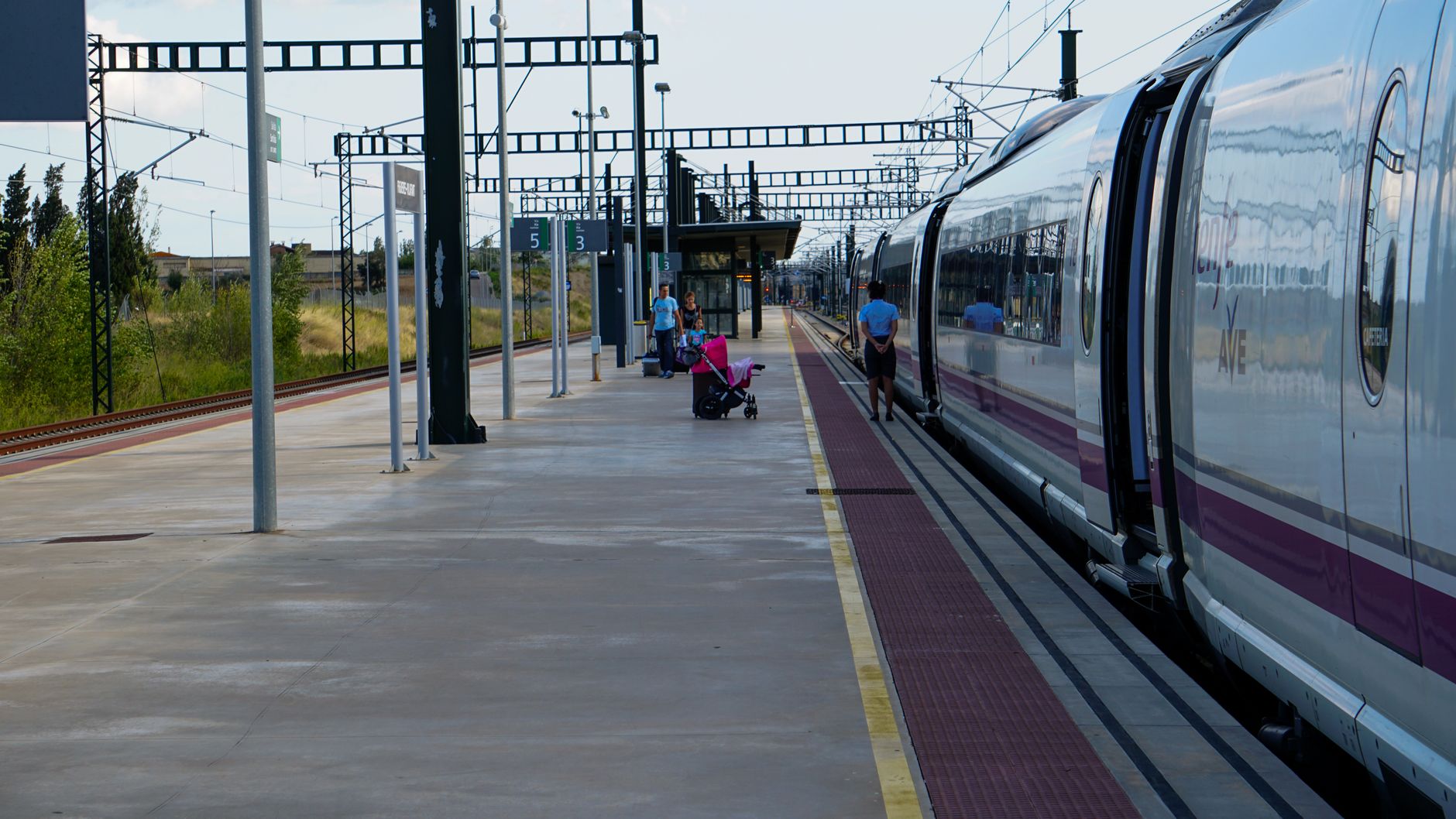
Wiesbaden sits close enough to Mainz that both cities could, in theory, see the same skyline from opposite banks of the Rhine - and yet the train journey to Frankfurt Airport tells a different story on each side. As the state capital of Hesse, Wiesbaden isn’t just geographically distinct from Mainz, it sits differently in the transport network too: where Mainz is served by just the S8 passing through on its way elsewhere, Wiesbaden Hauptbahnhof is itself the starting point of two lines, the S8 and the S9, both running to the airport - just by different routes. If you’ve read the piece on Airport Transfer Mainz, this isn’t the same article with a new city name bolted on: two rail lines instead of one, a different motorway approach, a taxi tariff that doesn’t need to cross a state border at all, and an express bus that Wiesbaden, unlike nearby Darmstadt, simply doesn’t have.
Roughly 30 kilometres separate central Wiesbaden from the airport, with journey times of 25 to 45 minutes depending on route and traffic (as of 2026). That sounds like the same arithmetic as any other German city without an airport of its own - except the specifics in Wiesbaden are genuinely different from those twelve kilometres west.
Wiesbaden Hauptbahnhof: the starting point for two lines
The key difference from Mainz starts right on the platform. The S8, which is just one of many stops on its route through Mainz, has its western terminus at Wiesbaden Hauptbahnhof - and so does the S9. Both lines start here, both run to the airport, and both do it without a single change. For travellers, that’s a genuinely different problem to have: at Wiesbaden Hauptbahnhof, the question isn’t whether you’ve caught the right line, but which of the two you fancy - a luxury problem Mainz doesn’t share.
The S8 runs between Wiesbaden and Hanau Hauptbahnhof, covering 70.3 kilometres over 29 stops. The S9 connects the same two termini but is noticeably shorter, at 66.1 kilometres over 26 stations - an early hint that, despite sharing both end points, the two lines don’t take the same path.
S8 or S9: via Mainz or around it
The difference plays out in Mainz itself - specifically, in whether the line goes through the city at all. The S8 crosses the Rhine near Mainz-Kastel, calls at Mainz Hauptbahnhof and Römisches Theater, then crosses the river a second time before continuing towards the airport and Frankfurt - a small detour that benefits passengers from Mainz but costs time along the way. The S9, added to the network in 2000, skips that loop entirely: it also stops at Mainz-Kastel, but from there runs straight on via Kelsterbach to the airport, never touching Mainz Hauptbahnhof at all.
One aside that catches plenty of visitors out: Mainz-Kastel carries the neighbouring city’s name, but has administratively belonged to Wiesbaden since the end of the Second World War, a legacy of the occupation-zone border that ran along the Rhine. The district both lines pass through is, in other words, already Wiesbaden territory before the train has even reached the river.
Journey planners generally show both lines taking a similar amount of time for the Wiesbaden-to-airport leg, typically around 34 to 35 minutes (as of 2026). But because the S9 skips the detour through Mainz Hauptbahnhof, it’s the more direct route on paper - an advantage that shows up most clearly whenever engineering works or diversions hit one of the two routes. In practice: if the app shows a similar arrival time for both, it rarely matters which you take; during disruption, though, it’s worth checking which of the two is running more reliably.
Tickets and fare zone: Hesse’s own capital on RMV’s home ground
Pricing barely differs from Mainz, for a straightforward reason: Mainz and Wiesbaden sit together in the same RMV fare zone, separate from the Frankfurt city zone and the airport’s own tariff zone. A single ticket from Wiesbaden to the airport currently runs to around €6 to €7 per person (as of 2026), marginally above the Mainz figure but firmly in the same bracket.
The real difference isn’t the price, it’s the fare geography behind it. For Mainz, membership of the Rhein-Main-Verkehrsverbund is the exception - a Hessian transport network that prices straight across the state line into Rhineland-Palatinate. Wiesbaden, by contrast, is genuine RMV territory as the state capital of Hesse, not an exception to anything: the network itself is headquartered nearby, in Hofheim am Taunus, right in the middle of its Hessian heartland. Boarding in Wiesbaden, you never step outside the RMV’s actual home turf - whereas a ticket from Mainz is, in effect, bridging a state border.
For anyone holding a Deutschlandticket, none of that changes the sums: the route counts as local transport and is covered automatically, no supplement needed. Travelling with others, as in Mainz, it’s worth checking group tickets in the RMV range, which usually work out cheaper per head than several single fares.
Regional station, long-distance station and the SkyLine to Terminal 2
At the airport itself, nothing changes compared with arriving from Mainz: both the S8 and S9 call at the Regionalbahnhof in the basement of Terminal 1, alongside the regional services RB58, RE59, RE2 and RE3. The Fernbahnhof, for ICE and IC services, sits above ground about a five-minute walk away and handles long-distance trains only.
One detail worth knowing if your flight leaves from Terminal 2: a free, automated people-mover called the SkyLine shuttles between the two terminals in a few minutes. Stepping off the S8 or S9 at the Regionalbahnhof puts you under Terminal 1 first, meaning a further change onto the SkyLine for Terminal 2 - a step plenty of first-timers don’t budget for, since it never shows up in the quoted train journey time.
The express bus Wiesbaden doesn’t have
Look into airport buses in the Rhine-Main region and you’ll almost certainly run into the AirLiner - an express bus running every 20 minutes directly between Frankfurt Airport and Darmstadt, currently around €4.30 a ride (as of 2026). What became clear researching this piece is that no such service exists for Wiesbaden. The AirLiner is a Darmstadt scheme, run by HEAG mobilo, with stops in Darmstadt and at the airport - it doesn’t touch Wiesbaden at all.
What Wiesbaden has instead is the RMV express bus pairing of X26 and X17: the X26 runs from Wiesbaden Hauptbahnhof to Hofheim am Taunus, where it connects with the X17 onward to Terminal 1. In practice that means one change and a total journey of around 75 minutes (as of 2026) - more than double the S8 or S9. As a day-to-day airport option that combination barely qualifies; it’s best treated as a fallback for when the railway isn’t running.
Long-distance coaches such as FlixBus occasionally serve the route too, with a handful of daily departures and journey times around 55 minutes - worth knowing if you’re already booked on a coach route for cost reasons, but too sparse to plan a specific flight around. Bottom line: the S8 or S9 remains the only genuinely practical option without a car or a taxi.
Engineering works in 2026: two lines, one closure
Because the S8 and S9 both run along the same Wiesbaden-Mainz-Kastel-airport corridor, the works affecting parts of the network between Wiesbaden, Mainz, Frankfurt and the airport since 16 January 2026 hit Wiesbaden travellers at the root: it isn’t just one line out of several, as in Mainz, but potentially both connections that run from the Hauptbahnhof to the airport at all. Rail replacement buses operate on some sections, with diversions that may set you down at Frankfurt Hauptbahnhof rather than the Regionalbahnhof.
The recommended workaround during this period is a Regional-Express or IC service from Wiesbaden Hauptbahnhof to Frankfurt Hauptbahnhof, continuing to the airport by S-Bahn or regional train from there. Budget 45 to 60 minutes of extra buffer where replacement buses are involved, 30 to 45 minutes extra for a change via Frankfurt Hauptbahnhof, and a full additional hour if you’re flying before 9am. Whether the disruption is still live by the time you travel is worth checking directly with RMV or DB shortly beforehand - works of this kind tend to slip more often than announced.
Driving: the A66 instead of the A60
If you’re driving yourself, the route from Wiesbaden differs from Mainz’s: instead of the A60 and the Frankfurter Kreuz, it’s the A66 towards Frankfurt, then onto the A3 or A5 to the airport. The distance, at around 30 to 35 kilometres, is marginally longer than from Mainz, and under normal conditions the drive takes 25 to 35 minutes - at rush hour, roughly 7 to 9am and 4 to 6pm, that can easily stretch to the best part of an hour or more (as of 2026).
Parking right at the terminal currently costs from around €29 a day, with cheaper park-and-fly options a little further out from around €5 a day (as of 2026, prices vary considerably by provider and how far ahead you book). For a single pickup it’s rarely worth it - the S8, S9 or a taxi is usually the simpler choice.
Taxi from Wiesbaden: a fixed price, even within Hesse
A metered taxi from central Wiesbaden to the airport costs, depending on operator, traffic and time of day, somewhere around €70 to €100 (as of 2026) - noticeably more than the €55 to €90 bracket in Mainz. The reason is the same mechanism, just without the state border: Frankfurt Airport sits outside Wiesbaden’s mandatory service area, and the official Wiesbaden taxi tariff, set by the municipality under §51 of the Passenger Transport Act, applies strictly within its own city limits - how that works generally is covered in Taxi fares in Germany. Unlike a trip from Mainz, you don’t cross a state line here, since both Wiesbaden and the airport sit in Hesse - but that changes nothing about the mechanism: even within a single federal state, a trip outside the mandatory service area is a matter for negotiation, not an automatic metered fare.
Most Wiesbaden taxi firms therefore offer fixed prices for the airport route as standard, typically between €60 and €95 depending on vehicle class and how far ahead you book. The advantage is the usual one: the price is settled before you set off, and a sluggish afternoon on the A66 becomes the driver’s problem, not yours.
Private transfer and shuttle: when it’s worth it
If you want your arrival at the airport to be fully predictable, book a private transfer ahead of time. The driver generally tracks your flight, waits in arrivals with a name board, and adjusts the pickup time automatically if you’re delayed. Legally, as elsewhere, this runs as private hire with a driver - what that means day to day, and when booking by the hour beats a single transfer, is covered in detail under Chauffeur service.
On price, fixed-fee transfers from Wiesbaden mostly sit between €55 and €75 for a saloon car carrying up to three people - cheaper than the top end of a metered taxi, with the same certainty built in. For groups, it’s worth looking at shared shuttle rides in a minibus, which often work out at only €15 to €35 per person (as of 2026), in exchange for fixed departure times rather than an individual pickup.
Worked example: a late flight, two people, medium luggage
An example to make the choice concrete: two people, one large case each, flying out at 9.40pm, meaning they need to be off the train at the Regionalbahnhof by around 8pm.
On the S8 or S9, that’s entirely manageable at that hour - both lines are still running a dense early-evening frequency, and the fare for two comes to roughly €12 to €14 combined. Things get more interesting on the way back if the flight lands late: after midnight, the frequency on both lines thins out noticeably, and anyone arriving after 1am or 2am should check the live timetable for whether a train is even running, rather than assuming the daytime frequency holds.
By taxi, the same journey costs a fixed price of an estimated €65 to €85, regardless of the hour - an argument that matters far more for a late landing with no guaranteed train than it does on a bright afternoon. A pre-booked transfer usually comes out similarly priced, with the added benefit that the pickup time adjusts automatically for delays, rather than you waiting on an empty platform for a train that may already have been the last of the night.
For a flight at a sensible hour with light luggage, the same sums tip clearly back towards the S8 or S9 - the time and cost advantage of the train is real, just stronger or weaker depending on the clock.
Accessibility and luggage on the way to the platform
Both Wiesbaden Hauptbahnhof and the Regionalbahnhof at the airport are step-free with lifts throughout - unsurprising for stations of this size, though not a given at every smaller stop along the route, Mainz-Kastel included. For travellers relying on a wheelchair or walking aids, the S8 and S9 are therefore a genuine option, not a fallback.
With a lot of luggage, a different factor comes into play: getting from the platform to Terminal 1 involves lifts and, in places, a longer walk, and anyone heading on to Terminal 2 needs the SkyLine on top of that. A taxi or transfer, by contrast, pulls up right at the door of whichever terminal you actually need. From about three or four large cases for a small group upwards, or for a flight from Terminal 2, the taxi tends to be the more practical choice.
Which option suits your situation
Light luggage, a flight at a sensible hour: the S8 or S9 - both cheap, both change-free, often running a combined 15-minute frequency towards the airport in practice (as of 2026).
A very early, very late or overnight flight: check the timetable for both lines specifically, since the frequency drops sharply after midnight; a taxi or pre-booked transfer is the safer fallback.
A flight from Terminal 2: factor in the SkyLine on top of the Regionalbahnhof arrival - one more reason to lean towards a taxi with heavy luggage.
Three or more people with luggage: a taxi or shuttle, since the fixed price applies per journey, not per head.
A business appointment, or wanting nothing to think about: a pre-booked private transfer with flight tracking.
Engineering works or disruption on the S8/S9: build in buffer time, since both lines run the same corridor and can be affected together.
If you need a taxi within Frankfurt itself rather than the journey to the airport, the full tariff is under taxi fares in Frankfurt.
All figures reflect the position in 2026; rail fares and taxi tariffs are adjusted regularly, and the engineering works on the S8/S9 corridor were still ongoing at the time of writing, so check journey times and prices again shortly before you travel. What holds regardless is the structural difference from Mainz across the river: Wiesbaden isn’t the far end of someone else’s line, it’s the starting point of two of its own - in exchange for an express bus that Darmstadt, twelve kilometres away, has had for years. Both cities end up reaching the same airport in a broadly similar time, just by routes that look genuinely different once you dig into them.
Keep reading
Airport Transfer
Airport Transfer Mainz: S8, Taxi or Shuttle to Frankfurt Airport
Mainz has no airport of its own: the S8 gets you to Frankfurt Airport in around 30 minutes, taxis from about €55, plus fare zones, 2026 engineering works and shuttles explained.
Jonas Reinhardt3 July 2026
Airport Transfer
Cologne Bonn Airport Transfer: S19, SB60 or Taxi – What Each City Costs
From Cologne Bonn Airport into town in 2026: €4 by S-Bahn to Cologne, €10.50 on the SB60 express bus to Bonn, roughly €51 to €57 by taxi to Cologne and around €80 to Bonn – and why the Bonn route changes in December 2026.
Jonas Reinhardt25 September 2026
Airport Transfer
Nuremberg Airport Transfer: the U2 for €3.90 or a Taxi for Just Under €30
Nuremberg Airport to the city in 2026: the U2 reaches the main station in 13 minutes for €3.90, a taxi costs around €26 to €30, buses run to Erlangen and Fürth, the N12 night bus covers weekends – and why the maths works so differently from Munich or Frankfurt.
Jonas Reinhardt25 September 2026
Airport Transfer
Airport Transfer Hamburg: S1, Taxi or Private Car to HAM
Hamburg Airport into the city in 2026: the S1 in 25 minutes to Hauptbahnhof, taxis from around 30 euros, night bus 606, and when a private transfer is worth it.
Jonas Reinhardt19 August 2026
Airport Transfer
Barcelona Airport Transfer: Aerobús, Metro, R2 or Taxi – T1 or T2?
Barcelona-El Prat into the city in 2026: Aerobús for €7.75, metro L9 Sud with a €5.90 airport ticket, the R2 Nord train from T2 only, and taxis with a €4.60 airport supplement and €21 minimum – and why your terminal decides every option.
Jonas Reinhardt25 September 2026