Taxi Leipzig: What a Ride Costs Under the 2026 Tariff
Leipzig raised its taxi tariff in summer 2026 for the first time since 2022. The tapered rate makes short hops dear and long rides cheaper, the airport runs on a tariff of its own – and a fixed price booked in advance costs you more in Leipzig, not less.

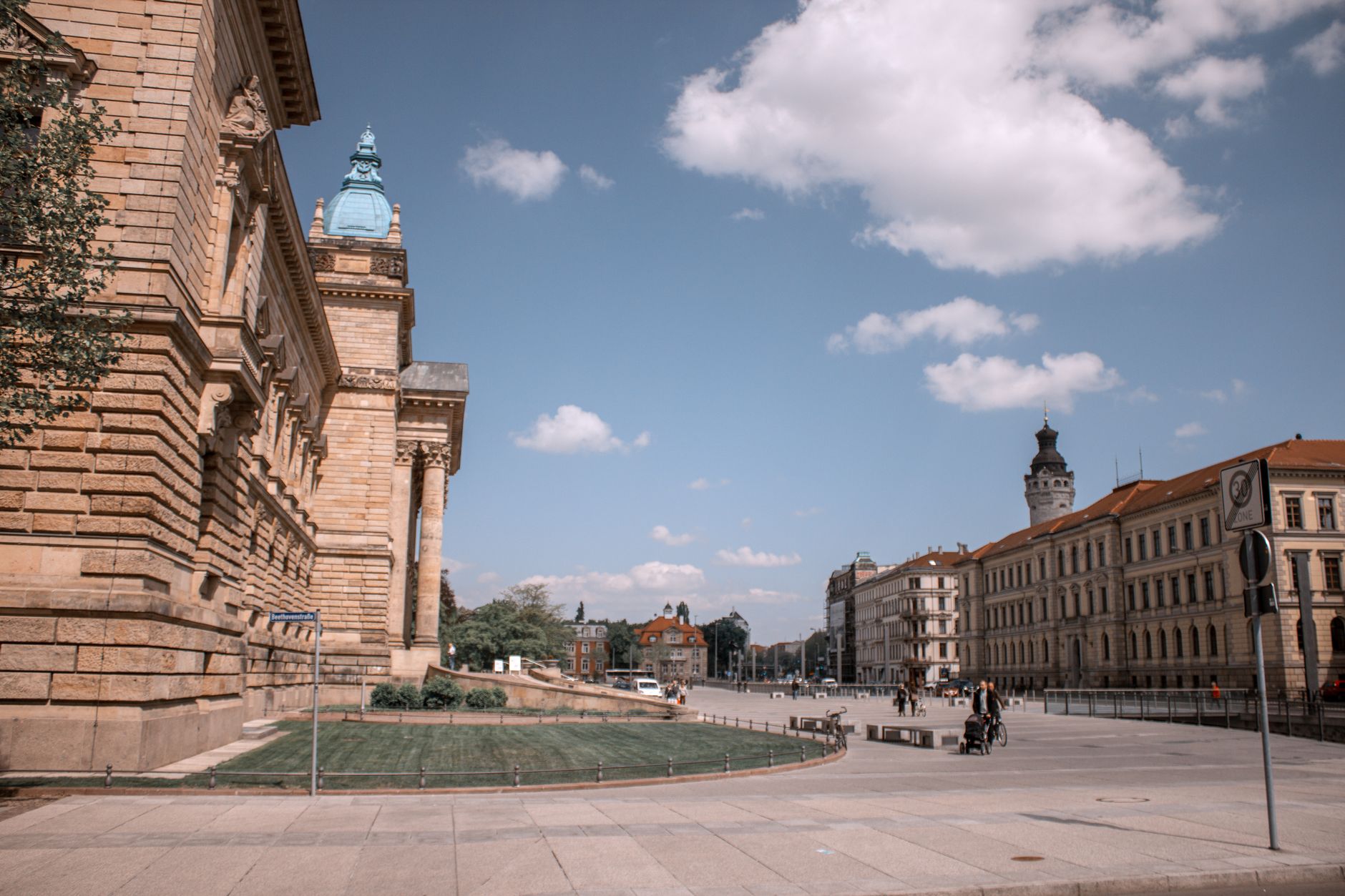
A Leipzig taxi opens at €4.50, and the first three kilometres then cost €3.30 each. It’s a tariff built around short city-centre hops: ride from the Hauptbahnhof to Augustusplatz and you pay a lot per kilometre; head out to the Neue Messe or Grünau and the rate drops from the fourth kilometre and again from the eleventh. A new ordinance has applied since summer 2026, the first rise since 2022, and it comes with a Leipzig quirk worth knowing before you accept a fixed price in an app.
The new tariff: €4.50 to start and a three-step taper
The legal basis is the city’s Beförderungsentgeltverordnung, its taxi fare ordinance. The city council passed it at its early-July 2026 session – 49 votes to 9, according to the Leipziger Internet Zeitung. It was published in the electronic official gazette on 8 August 2026 and, per its final clause, takes effect on the seventh day after publication, so it has applied since mid-August 2026. Some online fare calculators already list it as “July 2026”; that’s the date of the vote, not the start.
The day tariff runs on working days from 5am to 8pm:
- Base fare: €4.50 (previously €3.90)
- Kilometres 1–3: €3.30 (previously €3.20)
- Kilometres 4–10: €2.40 (previously €2.20)
- From the 11th kilometre: €2.20 (previously €2.10)
- Waiting time: €40 an hour (previously €35)
The night tariff applies on working days from 8pm to 5am and all day on Sundays and public holidays. The base fare stays at €4.50, the kilometres cost €3.40, €2.70 and €2.30, and waiting is again €40 an hour. The meter ticks up in 10-cent steps, and the switch between day and night has to happen automatically – the driver can’t flip it early by hand.
To see what the rise means in practice, take a typical seven-kilometre daytime ride: €22.30 on the old tariff, €24.00 on the new one. That’s just under 7.6 per cent, in line with the roughly 7.5 per cent quoted in the council debate. Fuel, maintenance and the minimum wage were cited as the reasons; the same reporting put the number of Leipzig taxis at 510, down from 558 in 2022.
What typical journeys cost
All on the day tariff, on a clear road, using road distances from the Hauptbahnhof:
- To Augustusplatz, about 1.5 km: €4.50 + 1.5 × €3.30 = about €9.50
- To the Red Bull Arena, about 3.8 km: €4.50 + 3 × €3.30 + 0.8 × €2.40 = about €16.30
- To the Völkerschlachtdenkmal, about 4.5 km: €4.50 + €9.90 + 1.5 × €2.40 = about €18.00
- Ten kilometres, roughly out towards Grünau: €4.50 + €9.90 + 7 × €2.40 = €31.20
At night and on Sundays ten kilometres cost just over three euros more: €4.50 + 3 × €3.40 + 7 × €2.70 = €33.60. The step from the eleventh kilometre is where long journeys get their break – against cities with a single flat rate such as Cologne, Leipzig gets cheaper per kilometre the further you go. How base fares, tapers and time charges fit together across German cities is covered in German taxi fares explained.
The large-vehicle supplement is a hefty €10. It may only be charged if you explicitly order a larger taxi or five or more people travel – order a normal cab, get a van by chance, and you don’t pay it. Under the ordinance the meter may only be switched on at the pick-up address once the driver has made contact with you, or at the agreed time for a pre-booking.
To the Neue Messe: €26 and a tram that often wins
The Neue Messe sits on the northern edge of the city, a little over eight road kilometres from the Hauptbahnhof. On the day tariff:
€4.50 + 3 × €3.30 + 5 × €2.40 = €26.40 – or €28.20 at night or on a Sunday.
During the book fair in March and big congresses the approach roads clog, though, and waiting runs at €40 an hour, about 67 cents a minute. Fifteen minutes of stop-start turns €26 into €36 quickly. Tram line 16 runs from the Hauptbahnhof to the exhibition grounds and on fair days it’s often the faster option. In Frankfurt, where the Messe nearly touches the city centre and getting from the station to the fairground barely needs a taxi, the question hardly arises; Leipzig’s fair is far enough out that it genuinely does. My rule of thumb: tram out, and a taxi back only if you’re not leaving at the exact moment the halls close.
Leipzig/Halle Airport has a tariff of its own
The airport isn’t in Leipzig at all but in Schkeuditz, in the Nordsachsen district. Rides between the city of Leipzig and the airport therefore run neither on a freely agreed price nor automatically on the city tariff, but on a separate airport tariff. The Leipzig, Saalekreis and Nordsachsen districts and the cities of Leipzig and Halle set it in a joint agreement, so that taxis from all five areas can wait at the airport and all charge the same. The city is clear that the fare on this route is regulated – there’s no haggling.
The most recent published version of that agreement dates from 1 December 2022. It sets a €3.90 base fare and, by day, €3.20 for the first three kilometres, €2.20 up to the tenth and €2.10 from the eleventh; by night €3.30, €2.50 and €2.20; plus €35 an hour waiting – exactly the old Leipzig city tariff. And that is how it stays for now: the joint central-German tariff fell apart in 2026. Halle and the Saalekreis raised fares on 1 June, Leipzig on 15 August, and Nordsachsen – where the airport sits – not at all. According to the Nordsachsen district office, the 2022 agreement therefore remains in force until Nordsachsen changes its own tariff (as of September 2026). So the airport run is still charged at the old rate, even though Leipzig’s city tariff is now higher.
From the Hauptbahnhof to the terminal is about 20 to 22 road kilometres depending on route, roughly 25 minutes via the A14:
- 2022 airport tariff, day, 20 km: €3.90 + €9.60 + €15.40 + 10 × €2.10 = €49.90
- 2022 airport tariff, night, 20 km: €53.30
So budget a little over €50, nearer €58 at 22 km at night. Every route from the terminal into both cities – S-Bahn, night bus, Intercity and a taxi to Halle – is compared in Leipzig/Halle airport transfer.
The train is tough competition here. According to S-Bahn Mitteldeutschland, lines S5 and S5X together run every 30 minutes and take 12 minutes from the Hauptbahnhof to the airport station; Halle is 10 minutes the other way. A regional ticket costs a fraction of the taxi fare, and the Deutschlandticket covers it outright. Operation of the lines passes to Die Länderbahn from December 2026. The taxi really earns its keep at night, for four people with luggage, or when your address is nowhere near an S-Bahn stop. If you’re driving yourself, weigh what parking at Leipzig/Halle Airport costs against two taxi rides – on a longer trip the maths often tips towards parking. And leave proper slack for getting through airport security if you’re flying out early in the school holidays.
The regulated area stops at the city boundary
Unlike Cologne or Dresden, which stretch their tariffs well into the surrounding region, Leipzig keeps it simple: the Pflichtfahrbereich – the area where the tariff and the duty to carry apply – is the city of Leipzig. Inside it, a driver can’t refuse you even for a very short trip, as the city’s public-order office stresses, and the meter price is binding.
Ride out of the city – to Markkleeberg and the Cospudener See, say, or to Halle – and the fare for the whole journey may be agreed freely, and the same applies coming in from outside. If no price is agreed, the meter runs on the Leipzig tariff for the whole occupied distance. For Halle, around 40 kilometres, that would be €4.50 + €9.90 + €16.80 + 30 × €2.20 = €97.20 on the day tariff – a useful yardstick if someone quotes you a flat price. To size up trips into the region before you ring, check the road distances and drive times from Leipzig.
Booking a fixed price: in Leipzig it’s a premium, not a discount
This is where Leipzig really goes its own way. The new ordinance introduces an optional flat fare for booked rides: order by phone or app with a fixed start and destination and the operator may quote a fixed price in advance, confirmed by app, text or email. In Cologne, Munich or Dresden that’s a “tariff corridor” that can also come in below the meter. Not in Leipzig. The ordinance builds the fixed price from the distance tariff without waiting time, plus the €4.50 base fare – plus a 15 to 25 per cent surcharge on the total.
For the trade-fair run that means €26.40 on a clear-road meter, or €30.36 to €33.00 as a fixed price. You’re buying insurance against traffic, and it costs at least four euros. On an ordinary afternoon it isn’t worth it; during the book fair or in snow it can be, because a quarter of an hour stuck in traffic already adds €10 to the meter. According to the council debate, the surcharge can move within that band with demand – so a quote at the bottom of the range tells you it’s quiet.
Uber, Bolt and the minimum fares that were withdrawn
Leipzig was the first German city to set minimum fares for private-hire cars with a driver, in October 2021, pegged to bus fares at the time. In November 2024 Leipzig’s administrative court ruled that such minimum fares are lawful in principle but faulted how the 2021 rule was set. A new general order followed in April 2025, this time based on the taxi tariff plus a flat 12 per cent to stand in for waiting-time charges. The city withdrew it with effect from 1 June 2025 because its wording on the level was ambiguous. In August 2025 the administration said a new rule was “not possible in the near term”; in November 2025 it was still “under review”. I found no new minimum-fare rule as of September 2026.
In practice: Uber has been dispatching taxis in Leipzig since 2024, Bolt launched private-hire cars in November 2025 with steep introductory discounts, and for those private-hire rides there’s currently no price floor. An app fare can land well below the meter – or well above it when demand spikes. How the platforms build their prices is covered in Bolt prices in Germany.
Ordering a cab and making a complaint
The best-known dispatcher is Taxi-Zentrale Leipzig on 0341 4884, staffed around the clock, and there are nearly always cabs waiting at the Hauptbahnhof. On request the driver must give you a receipt showing date, total, route, the taxi’s licence number, a signature and the company stamp, and must let you see the ordinance, which every Leipzig taxi has to carry. To complain to the city you’ll need the licence number or number plate, plus time and place. Heading on elsewhere in Saxony? Dresden works very differently, with fixed route prices to its airport and a second rise already scheduled for January 2027.
All told, a Leipzig taxi is dearer on short hops than the €4.50 base fare suggests and cheaper on long runs than in many big western German cities. To the airport the S-Bahn is hard to beat at twelve minutes, and on fair days the tram is hard to beat to the Messe. And if an app offers you a fixed price, you now know that in Leipzig it sits above the meter – never below. All figures as of 2026.
Keep reading

Taxi & Fares
Taxi Cologne: What a Ride Costs and Why the Tariff Reaches Düsseldorf
Cologne taxi fares 2026: a €4.90 base fare, a flat €2.90 per kilometre, 60 cents a minute waiting – with worked fares to the trade fair, Cologne Bonn Airport and the rise already set for March 2027.
Jonas Reinhardt25 September 2026
Taxi & Fares
Taxi Düsseldorf: What a Ride Costs and Where the €25 Fixed Fare Applies
Düsseldorf taxi fares 2026: a €5 base fare, €2.70 per kilometre, €43 an hour waiting, a €2 airport supplement and a fixed price between the airport and the trade fair – with worked fares across the city.
Jonas Reinhardt25 September 2026
Taxi & Fares
Taxi Nuremberg: the Tariff Since June 2026 and What Rides Really Cost
Nuremberg taxi fares 2026: a €4.90 minimum fare, €5.10 for the first kilometre, then €2.70 and €2.20, €40 an hour waiting time – with worked fares to the trade fair, the airport and the Documentation Centre.
Jonas Reinhardt25 September 2026
Taxi & Fares
Taxi Dresden: Fares, Fixed Airport Prices and the 2027 Rise
Dresden taxi fares 2026: a €4.90 base fare, €3.20 per km for the first four kilometres, then €2.60 and €2.40, a fixed €48 from the airport to the Hauptbahnhof – with worked fares to the Frauenkirche and the second step due in January 2027.
Jonas Reinhardt25 September 2026
Taxi & Fares
Taxi Hanover: What the Ride Costs and Why One Tariff Reaches Past the City Limits
Hanover taxi tariff 2026: €4.50 base fare, €2.80 per kilometre, €35 an hour waiting, no night surcharge – and fixed prices bookable by app since September 2025.
Jonas Reinhardt5 August 2026