Kuala Lumpur Airport Transfer: KLIA Ekspres, Grab or the Coupon Desk?
Malaysia renamed both of its terminals, and almost every older guide still tells you the old version. Harmless enough, until you have to connect between them.

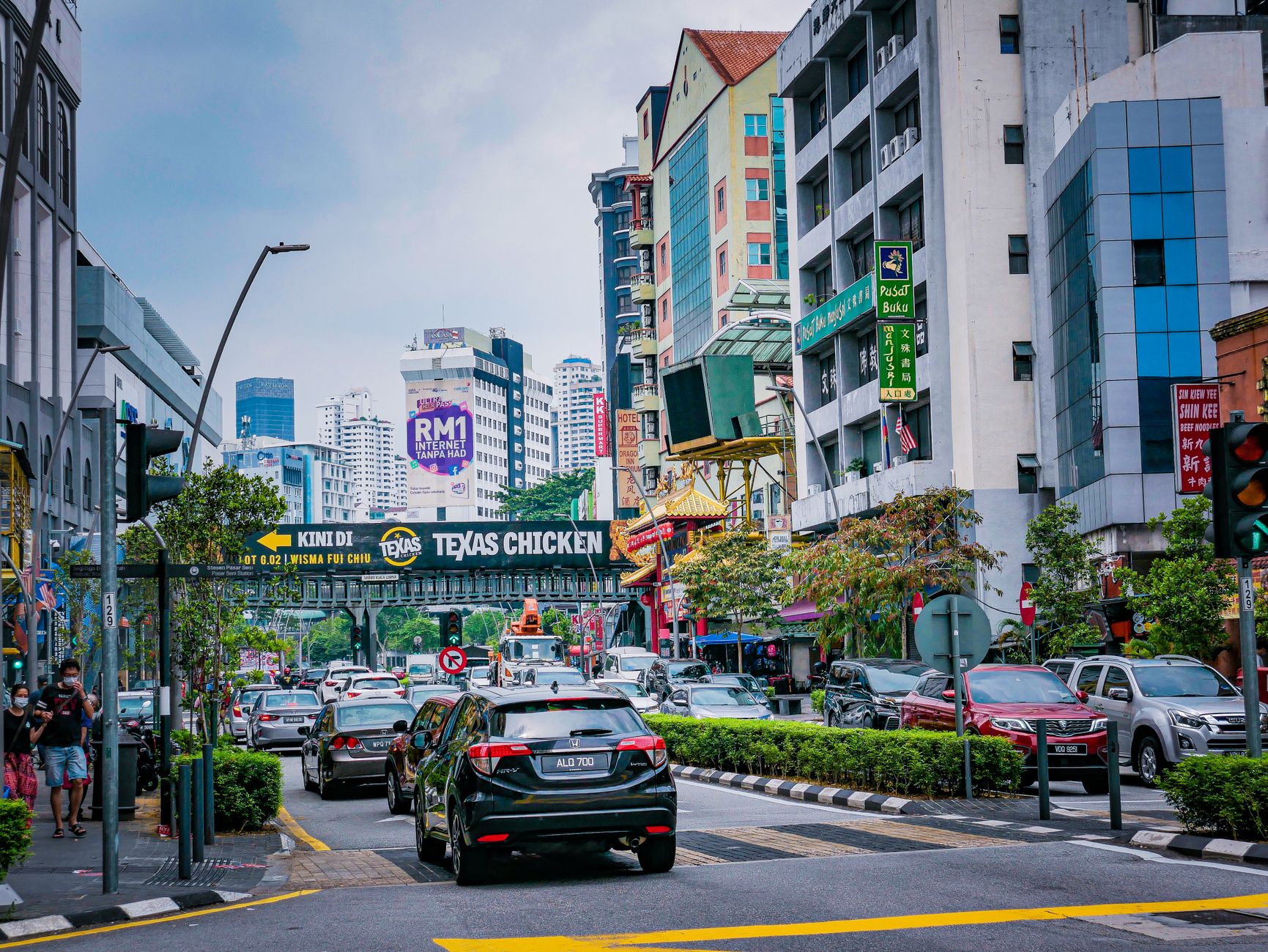
Kuala Lumpur ought to be the easy one. There is a proper airport train every 20 minutes, a ride-hailing app that practically everyone in the country uses, and an official taxi desk where the price is agreed before you get in the car. Three clean options, no haggling, none of the fare-tier guesswork that makes Istanbul such hard work.
The catch sits elsewhere. The airport has two separate terminal buildings, they have been called something different since 2023 than in nearly every travel blog on the subject — and anyone connecting between them faces a transfer most people budget fifteen minutes for, when the airport itself asks for four hours.
Terminal 1, Terminal 2 and the Names Still Printed Everywhere
In February 2023 the Malaysian cabinet approved what Malaysia Airports has been rolling out ever since: KLIA is now KLIA Terminal 1, and klia2 is now KLIA Terminal 2. Transport Minister Anthony Loke put the rebrand down to marketability and clarity — the old names implied two separate airports, when both buildings belong to the same one and both sit under the IATA code KUL.
The new names are real rather than decorative: the airport rail link serves its stations officially as “KLIA T1” and “KLIA T2”, and Malaysia Airports now heads the terminal page “KLIA Terminal 2”. Even so, forums, hotel pages and older guides still say “klia2” and “KLIA Main Terminal Building” — which matters the moment you type an address into an app.
In practice the split runs like this: Terminal 1 is the long-haul and network terminal — Malaysia Airlines, the big alliance carriers, and from 25 October 2026 also Lufthansa, whose LH 704 will leave Frankfurt at 21:30 five times a week non-stop for Kuala Lumpur. Terminal 2 is the low-cost terminal, built for AirAsia and effectively the whole Asian budget network. So if you are carrying on within South-East Asia — Langkawi, Penang, Bangkok, Bali — you are very probably departing from T2, wherever you landed.
KLIA Ekspres: 57 Kilometres in 28 Minutes
The KLIA Ekspres is why Kuala Lumpur comes out ahead of most Asian capitals on transfers. It runs non-stop between the airport and KL Sentral, the city’s central station, covering what the operator gives as 57 km in 28 minutes from T1 and 33 minutes from T2 — it calls at both terminals, so you never need to reach the other building first.
The standard one-way fare is RM 55 for adults and RM 25 for children aged 6 to 15, with under-6s travelling free. A return is RM 100 rather than RM 110. At the ECB reference rate of 17 September 2026 (€1 = RM 4.7061) that is roughly €11.70 one way and a little over €21 return (as of 2026). Buy through the app or website and the operator takes 10% off — about RM 49.50, or €10.50. Three or more adults travelling together can use the Group Saver package at RM 40 each, around €8.50.
Trains run every 20 minutes, all day, weekends and public holidays included. From KL Sentral the first departs at 05:00 and the last at 00:00; from KLIA T1 it is 05:00 and 00:05. Land after midnight and you need a different plan.
One detail that makes the outbound leg pleasant: KL Sentral has an in-town check-in. Malaysia Airlines (06:00 to 20:00) and Batik Air (06:00 to 18:00) accept baggage there, you need a valid train ticket for the airport sector, and the cut-off is two hours before departure. Drop the suitcase in the morning, travel out empty-handed.
KLIA Transit: Same Fare, Three Extra Stops
The same track carries the KLIA Transit — same railway, same RM 55 to the airport, but calling at Bandar Tasik Selatan, Putrajaya & Cyberjaya and Salak Tinggi on the way. That stretches the run to 35 minutes from T1 and 39 from T2, and the interval is coarser: every 15 minutes at weekday peaks, every 30 otherwise.
It earns its place for two groups only — people whose destination is one of those intermediate stops, Putrajaya’s government district for instance, and anyone already on the platform at the right minute. For a straight run into town it buys nothing but six extra minutes.
Grab at KLIA: The Fare Is Fixed, the Door Is the Problem
Grab is in Malaysia what Uber never quite became in Europe: the default. The advantage over a taxi is the familiar one — you see the fare before you book and pay on a stored card. On its own airport page Grab quotes RM 65 to 100 between the city centre and KLIA (roughly €13.80 to €21.25, as of 2026) for a journey of about 50 minutes.
The stumbling block is the meeting point, not the money. Pickups happen at fixed, signposted e-hailing bays, and they are not where you walk out of customs: Terminal 1 uses Level 1, Doors 3 and 4, a floor below the arrivals level; Terminal 2 uses Level 1 of the Transportation Hub at Gateway@klia2, Doors 4 and 5. Drop your pin wherever the phone happens to put it and you can spend twenty minutes standing somewhere no driver is allowed to stop. So when booking, don’t tap the map — type “KLIA” and pick the official pickup point from the list.
The Coupon Desk: What a Taxi from Kuala Lumpur Costs
At the Airport Limo desk in the international and domestic arrivals halls you state your destination and vehicle class — Budget, Premier or Family/MPV — and get a three-part coupon at a fixed price. No meter, no negotiation, and because the price is settled at a counter, none of the arguments that can make a taxi out of Istanbul Airport such an unpleasant start. Metered taxis on the Malaysian city tariff run alongside it.
The numbers are where it gets murky, and I would rather name the source than fake the precision. The published zone table that practically every guide quotes circulates in a version dated January 2015, listing the Kuala Lumpur City Centre zone at RM 74.80 budget, RM 102.60 premier and RM 200.20 family/MPV. What travellers actually report paying now sits nearer RM 75 to 120 for budget and premier into town, so around €16 to €25 — the order of magnitude holds, but that old table is not a price promise. On top of it comes a 50% night surcharge between 23:30 and 06:00, and expressway tolls are not necessarily inside the coupon price.
The short version: two of you with cabin bags, the train wins on both price and time. Four of you with suitcases, late at night, or a hotel nowhere near KL Sentral, and it flips. That trade-off is worked through properly under booking an airport transfer, and for a contrast with a strictly regulated meter system there is what a taxi costs in Dubai.
The KLIA2 Trap: Why Four Hours Is Not Paranoia
Here is the reason this article exists. Terminal 1 and Terminal 2 are not connected airside. They are treated as separate entities. Connecting from a long-haul arrival at T1 onto an AirAsia flight at T2 means clearing immigration, collecting your bags, going through customs, leaving the building, travelling to the other terminal, checking in again and passing security a second time. The airport’s own guidance is to allow a minimum of four hours. You will also need a valid transit visa if your nationality requires one, because you are formally entering the country.
AirAsia’s Fly-Thru only partly helps: it spares you the baggage reclaim when both flights use the same terminal, but it does not remove a terminal change.
The ride between the buildings, by contrast, is trivial. The free shuttle bus runs around the clock every 15 minutes — from Terminal 1 at Door 4, Level 1 of the Main Terminal Building, from Terminal 2 at Bay A10, Level 1 of Gateway@klia2 — and takes 10 to 15 minutes depending on traffic. The train is quicker and more predictable: the inter-terminal ERL transfer costs RM 2 for adults and RM 1 for children, well under 50 cents, and takes three minutes.
Don’t confuse it with the Aerotrain, back in service since 1 July 2025. That one links the Main Terminal Building with the Satellite Building inside Terminal 1, airside, in about two and a half minutes. It does not go to T2.
Anyone connecting onto AirAsia should rethink their hand luggage too: the allowances on Asian low-cost carriers are markedly tighter than on the long-haul flight that got you there, and a look at how cabin bag sizes compare across airlines before you pack is cheaper than paying at the gate.
The Bus, When Price Really Is Everything
That leaves the cheapest option of all: Skybus and Aerobus run from both terminals to KL Sentral roughly every half hour from 05:00 until midnight, for about RM 12 to 14 — around €2.50 to €3 — in 60 to 75 minutes depending on expressway traffic. A fifth of the train fare for two to two and a half times the journey: a good deal for backpackers with time, a bad one for anyone with a connection to make.
What Still Needs Sorting at the German End
Three weeks in South-East Asia start in Germany. If you are driving to the departure airport, work it out rather than guess — what a space at Frankfurt Airport costs per day and across three weeks is the difference between a rounding error and the price of a domestic flight in Malaysia.
Then the way home. The Lufthansa rotation lands in Frankfurt at 06:00, an hour at which nobody wants logistics after twelve hours in the air. How long each route from Frankfurt Airport into the city actually takes is better settled in advance than at the baggage belt, and if you want a taxi figure to weigh against it, the driving distance, drive time and an indicative fare from FRA are set out side by side.
Taken together, Kuala Lumpur is one of the most straightforward transfer destinations anywhere — a train every 20 minutes for under twelve euros, an app that works nationwide, and a fixed-price desk for everything else. The one decision you genuinely have to make early is not about cost but about connecting: if your ticket has an onward flight from Terminal 2 behind a long-haul arrival into Terminal 1, those four hours in between are not a buffer. They are the schedule.
Keep reading
Airport Transfer
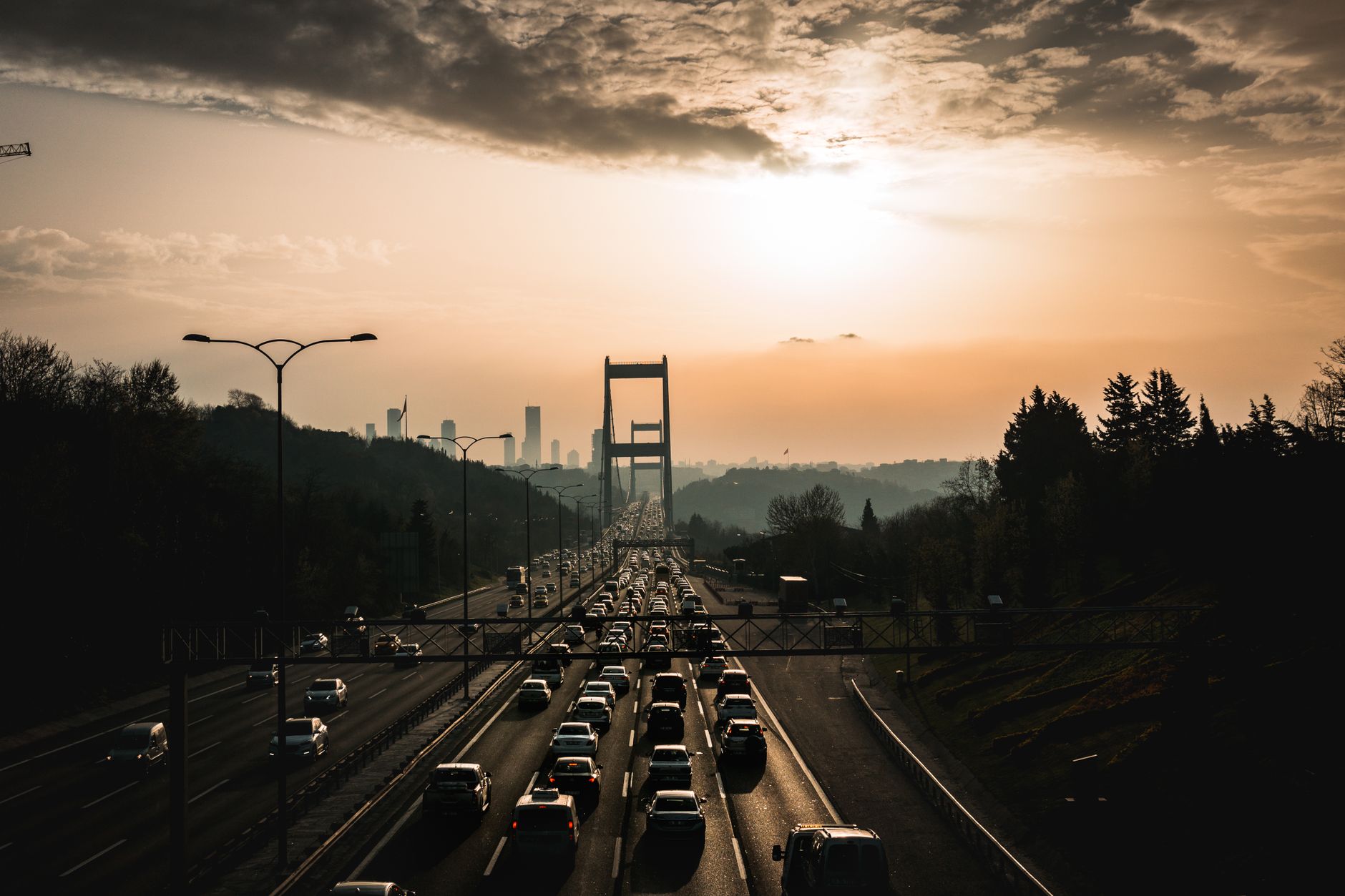
Istanbul Airport Transfer: Havaist, the M11 or a Taxi into Town?
Istanbul airport transfer 2026: Havaist buses, the M11 metro, taxi fare tiers, the overcharging risk and private transfers – IST versus Sabiha Gökçen compared.
Jonas Reinhardt24 July 2026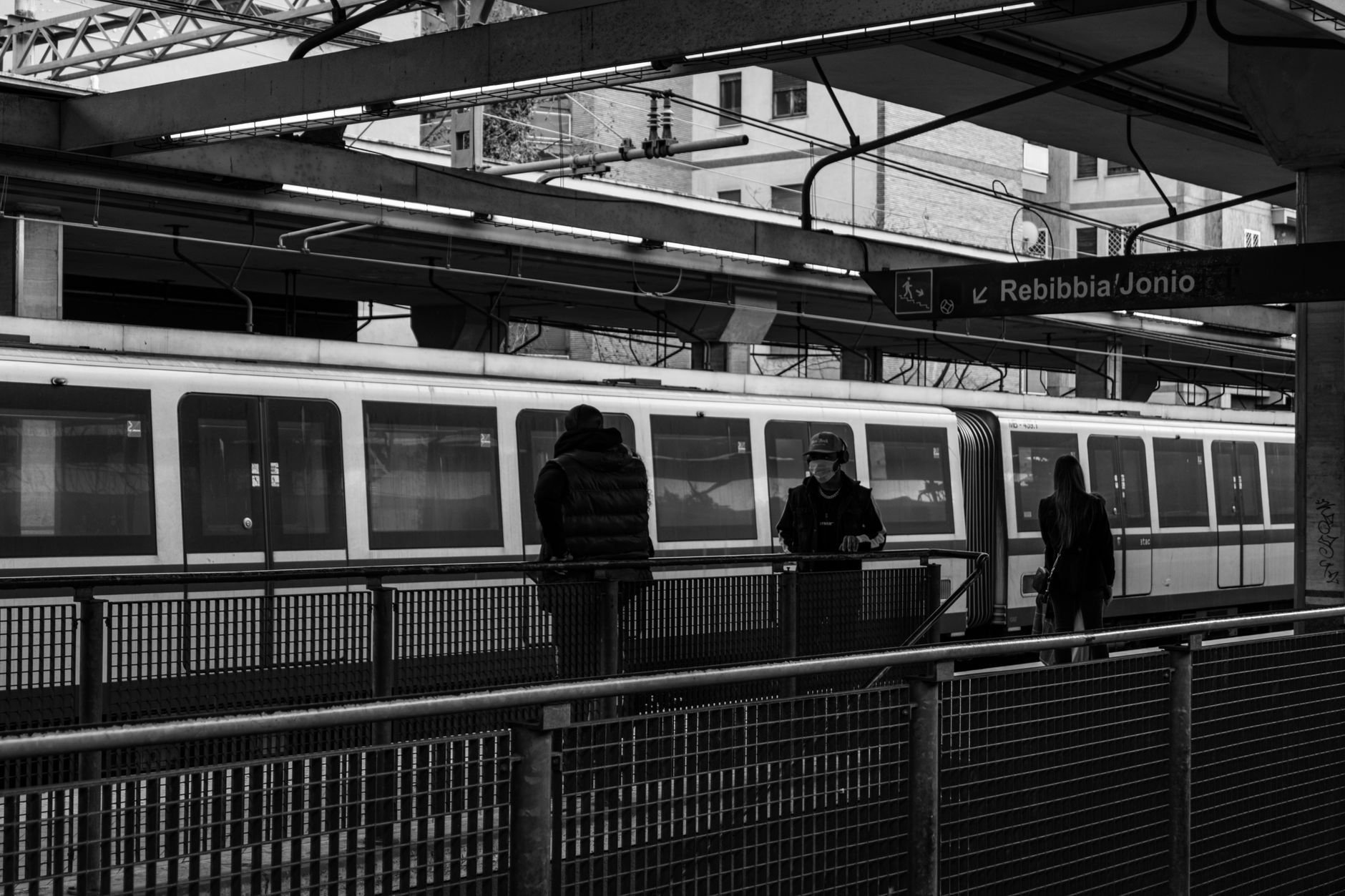
Airport Transfer
Rome Airport Transfer: Fiumicino, Ciampino, Train or Taxi?
Rome airport transfer 2026: Leonardo Express for €14, fixed taxi fares from €40 or €55, the Ciampino Airlink for €2.70 — two airports, two systems.
Jonas Reinhardt18 July 2026
Airport Transfer
Mallorca Airport Transfer: Bus, Taxi or Pre-booked?
From Palma airport in 2026: bus lines A1 and A2, regulated taxi fares with a €4.65 airport supplement — and when a pre-booked transfer still wins.
Jonas Reinhardt14 August 2026
Airport Transfer
Fuerteventura Airport Transfer: Taxi, Bus or Car Hire?
Fuerteventura Airport in 2026: metered taxis, no flat-fare list, bus line 3 to the terminal — and why Corralejo, Costa Calma and Morro Jable differ hugely.
Jonas Reinhardt15 July 2026
Airport Transfer
Munich Airport Transfer: S1, S8, the Lufthansa Bus or a €96 Taxi
Munich Airport to the city in 2026: S-Bahn from €15.10 (less with a stripe ticket), Lufthansa Express Bus from €12.50, a €96 fixed taxi fare to the main station – and what makes sense for one, two or four people.
Jonas Reinhardt25 September 2026