Rome Airport Transfer: Fiumicino, Ciampino, Train or Taxi?
Rome is the only destination in this series with two airports instead of one, and that changes the whole calculation. Fiumicino has a direct train into the centre; Ciampino doesn't — but it's closer and noticeably cheaper by taxi.

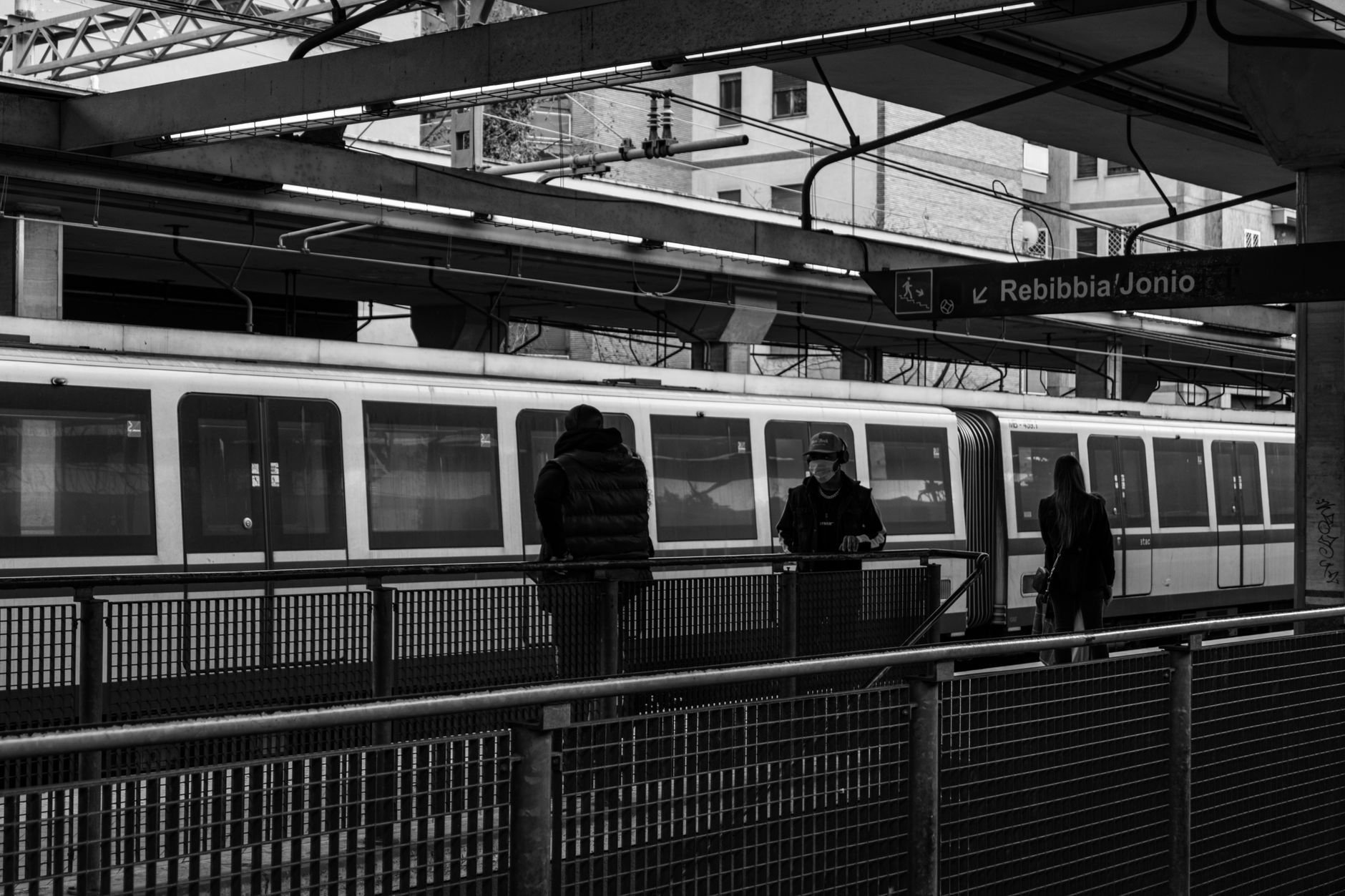
Rome is the only destination in this series where the first question isn’t “train or taxi” but simply: which airport. Search “Rome airport transfer” expecting one clean answer and you get two entirely separate systems instead. Fiumicino and Ciampino sit in opposite directions from the city, with different rail links, different fixed taxi fares and different airlines flying into each. Mix the two up and you’ll lose more time on arrival day than any other decision on this trip.
The good news: both airports are, in their own way, well connected. Fiumicino has the Leonardo Express, a direct train unlike anything else in this series. Ciampino has no station of its own, but it sits closer to town and its fixed fares are cheaper across the board. Which one matters to you depends almost entirely on where your flight actually lands — and that’s where this piece starts.
Two Airports, Two Different Games
Fiumicino, officially Leonardo da Vinci Airport and almost always just called FCO, sits around 34 kilometres south-west of the centre, right on the coast. It’s the big, international one of the two: long-haul flights land here, ITA Airways is based here, and most direct routes from Germany and the wider region come through it, whether on Lufthansa, Eurowings or ITA. Two terminals, T1 and T3, share the operation, with a station sitting directly beneath the terminal roof.
Ciampino, known as CIA, lies in the opposite direction, around 16 kilometres south-east of town — noticeably closer than Fiumicino. This is where Ryanair and other low-cost carriers from Germany and the rest of Europe mostly land. It’s smaller, the terminal is compact, but it has one real drawback: no station of its own. Anyone wanting to continue by rail needs an extra step, which we’ll get to shortly.
In practical terms, that means checking your booking confirmation rather than your memory. “Rome” appears on both ticket types, but Fiumicino and Ciampino are almost 50 kilometres apart, on opposite sides of the city. How tightly a city can regulate airport fares is worth seeing by comparison with Mallorca Airport Transfer — there, one airport means one rulebook. Rome runs two fully separate systems that only share the same underlying idea.
The Leonardo Express: The Direct Run from Fiumicino
From Fiumicino, the Leonardo Express is the easiest option if your destination sits near Roma Termini. The train runs non-stop, with no intermediate stations at all, straight from the station beneath the terminal to the terminus in the heart of the city. Journey time is 32 minutes, with departures every 15 to 30 minutes depending on the time of day, running from early morning until late at night.
The fare is €14 per person, bought directly from a Trenitalia machine or the app (as of 2026). Book through third-party websites instead and you’ll often pay more, sometimes closer to €18 for the same ride — the mark-up goes to the reseller, not the railway, so buy direct if you can. Two family details that rarely make it into guides: children under 4 travel free, and one child aged 4 to 12 travels free per paying adult. There’s also a mini-group fare: four tickets bought together for around €40 instead of €56 bought individually (as of 2026) — worth asking about at the ticket counter for a family of four or a small group.
One thing that catches out first-time visitors: a paper ticket without a fixed train and time must be validated at the small yellow machines on the platform before boarding. An unvalidated ticket earns a fine on inspection, whether or not you actually paid for it.
Regional Rail: FL1 from Fiumicino, the Ciampino Airlink from Ciampino
Anyone wanting to save money, or simply not headed for Termini, has a cheaper alternative to the direct train at both airports — it just looks completely different depending on which one you land at.
From Fiumicino, the FL1 regional line runs from the airport via Roma Trastevere, Roma Ostiense and Roma Tiburtina, continuing north from there. The fare is €8 (as of 2026), noticeably less than the Leonardo Express, and trains run roughly every 15 minutes on weekdays, 30 minutes at weekends. The catch: the FL1 does not call at Termini. That makes it the better choice if your accommodation sits closer to Trastevere or Ostiense — two neighbourhoods increasingly popular with short-break visitors over the station district around Termini itself. Roma Tiburtina, in turn, is a major interchange in its own right, with its own metro connection and long-distance trains onward across Italy.
From Ciampino, this option doesn’t exist at all, because the airport has no station of its own. Instead there’s the Ciampino Airlink combination: a shuttle bus that takes around 10 minutes from the terminal forecourt to Ciampino railway station, where a regional train to Termini connects immediately, adding roughly 15 minutes more. The combined bus-and-train ticket costs €2.70 (as of 2026) — by far the cheapest way into the centre from either airport. Bus and train are tightly coordinated, with several dozen combined services running each day, so waiting time at the station usually stays short. With a lot of luggage or a very late flight, though, the double change is a different proposition from the direct train out of Fiumicino.
Shuttle Buses: The Middle Option at Both Airports
Both airports are served by private coach operators — Terravision, SIT Bus Shuttle, and, from Ciampino, Schiaffini as well — each running non-stop to Roma Termini.
From Fiumicino, a seat booked online costs around €7 one way, closer to €10 if bought at the airport kiosk; a return comes to roughly €13. Journey time depends heavily on traffic on the motorway and the GRA, Rome’s ring road — allow 55 to 70 minutes, more in heavy traffic. Some services also call at the Vatican, handy if you’re heading for St Peter’s or the Prati district.
From Ciampino, the online fare is around €6 one way, €11 return, and the journey takes roughly 40 minutes — noticeably quicker than from Fiumicino, simply because the distance is shorter.
At both airports, the bus sits in the middle: cheaper than a taxi, but without the fixed-price certainty or door-to-door comfort of a pre-booked transfer. For solo travellers or pairs with manageable luggage, it’s a perfectly sound, unglamorous choice.
Taxis: The Fixed Fare Everyone Should Know
This is the part worth remembering before you fly to Rome — it’s where most of the confusion happens, and frankly most of the overcharging too.
Rome has officially set flat fares for taxi journeys between the airports and the city centre, fixed by the municipality of Roma Capitale. They apply regardless of time of day, day of the week, traffic or how many bags you’re carrying — no night surcharge, no holiday loading, no luggage fee. That’s not something you can take for granted in Europe, not unlike the regulated fares I covered for Mallorca, except Rome doesn’t work off a supplement added to a running meter — it’s a genuine flat amount per route.
The figures worth knowing (as of 2026): from Fiumicino into the centre, meaning inside the Aurelian Walls, you pay €55. To Tiburtina station it’s €60, to Ostiense station €50. And for a journey directly between the two airports — useful if you’ve got a connecting transfer via Ciampino, say — there’s a flat fare of €55 as well. From Ciampino into the centre it’s just €40, and the same to Ostiense and Tiburtina stations. The shorter distance shows up directly in the price.
Two things worth watching for. First: the fixed fare only applies to official white taxis with a Rome licence, identifiable by their plates and the marked taxi rank in the arrivals hall — not to drivers who approach you before you’ve even reached the exit offering their own price. That’s almost always more expensive, never less. Second: the flat fare only covers journeys inside the Aurelian Walls or to the destinations named above. If your hotel sits outside that zone, the meter runs instead, capped at a maximum of €80 within the GRA ring where no fixed fare exists. How a metered fare is generally built up — base charge, per-kilometre rate, waiting time — is covered under Taxi Fares in Germany; the principle travels well across borders, even if the amounts and the zoning are entirely Rome’s own.
Booking a Private Transfer
With fares this clearly fixed, it’s fair to wonder why anyone would bother pre-booking at all. The answer has less to do with price than with certainty.
A pre-booked private transfer waits with your name on a board in arrivals, tracks your flight number, and adjusts the pick-up time automatically if your flight runs badly late. The car takes you straight to the door, no stops along the way and no taxi-rank queue after a long-haul arrival with five aircraft landing at once. The price usually sits close to the official taxi flat fare, sometimes a touch above, but it’s fixed at the point of booking. For longer or less clear-cut routes outside the centre — much like the long coastal runs I described in Antalya Airport Transfer — that’s often the more relaxed option than a meter still climbing in GRA traffic.
What I’d check before booking any transfer: that the correct airport is actually named on the booking form, whether a delay allowance is built into the price, and exactly where at the terminal you’re meant to meet. At Fiumicino, with its two terminals, that last point is not a formality — get the meeting point wrong and you can end up with a twenty-minute walk between T1 and T3.
Luggage, Night Flights, Car Seats
Three practical points that end up shaping the choice more than the price on paper.
Night flights. Both airports handle flights into the late evening, but buses and regional trains thin out noticeably after midnight, and at Ciampino they can stop altogether. The Leonardo Express runs late, but if your flight genuinely lands in the small hours, the taxi’s fixed, time-independent price is the least stressful option — no night surcharge, no waiting for the next bus.
Car seats. They’re compulsory for young children in Italy. Taxis don’t carry one as standard, and the question naturally doesn’t arise on a train or bus. With a pre-booked private transfer, a car seat is the most reliable option — but only if you state the need explicitly when booking, not at the kerb.
Luggage. On the train or bus, it’s purely a question of space, and the Leonardo Express has its own luggage racks at the ends of each carriage. In a taxi it costs nothing extra, since the flat fare applies regardless of how many bags you’re carrying. Four people with four large cases and a connection to make is a case where I’d lean towards a taxi or private transfer in high season rather than the Ciampino Airlink and its bus-to-train change.
The Mistake That Costs People Money Every Year
Two mistakes repeat themselves in Rome more than at any other destination in this series, precisely because there are two airports.
The first: the wrong airport on the booking form. A taxi or private transfer booked for Ciampino by mistake, when the flight actually lands at Fiumicino, ends up waiting almost 50 kilometres away in the wrong place — and cancelling it rarely comes free. Check the airport code on your booking twice, not just the city name.
The second, more familiar mistake: on package holidays, the transfer to the hotel is usually already included. Book a taxi or an online transfer on top of that and you pay twice for the same journey. Check your travel documents first — they’ll usually also tell you exactly where the operator’s representative waits in the arrivals hall, typically at a desk with a visible logo.
What I’d Check Before Flying
Which of the two airports it actually is. Not “Rome,” but Fiumicino or Ciampino — spelled out clearly on every flight ticket as a code: FCO or CIA.
How close your hotel sits to Termini, Trastevere or Ostiense. That decides whether the cheaper FL1 is worth it at all, or whether the Leonardo Express, heading straight for Termini, is the more convenient choice.
Whether the transfer is already included in your travel price. Two minutes in the booking documents before adding anything extra.
Exactly when your flight lands. A very late arrival tips the calculation noticeably in favour of a taxi or a private transfer.
Don’t Forget the Return Leg
The journey back gets underestimated in Rome more easily than the way in, largely because the city itself soaks up all the attention.
With a pre-booked transfer, the same rule applies here as everywhere else: the hotel pick-up time is earlier than you think, especially if the route crosses the GRA during rush hour. Build in more buffer from Fiumicino than from Ciampino — the longer route is more sensitive to traffic.
Travelling back by Leonardo Express or FL1, factor in the walk to the platform and ticket validation, particularly during rush hour, when Roma Termini itself can feel busier than the airport. With the Ciampino Airlink, check the last combined bus-and-train service of the day before booking a late flight home, not after.
And with a taxi: book it the evening before through reception or an official app, rather than hoping to flag one down on the street in the morning. The flat fare applies either way, but the wait outside a busy hotel is noticeably shorter with a booking in place.
Another destination with two airports, but no official fixed fare and a well-documented taxi-overcharging risk, is Istanbul, covered under Istanbul airport transfer.
How the meter, airport surcharge and app alternatives look in a completely different legal system is shown by Dubai, covered under taxi cost in Dubai.
All prices reflect the 2026 position, set by Trenitalia for the rail routes and by the municipality of Roma Capitale for the fixed taxi fares; both are reviewed and adjusted periodically. What doesn’t change is the basic rule for this city: work out which of the two airports you’re dealing with first, then choose the transfer — not the other way round. Follow that order and Rome feels considerably calmer to arrive in, whether your flight lands at Fiumicino or Ciampino.
Keep reading

Airport Transfer
Mallorca Airport Transfer: Bus, Taxi or Pre-booked?
From Palma airport in 2026: bus lines A1 and A2, regulated taxi fares with a €4.65 airport supplement — and when a pre-booked transfer still wins.
Jonas Reinhardt14 August 2026
Airport Transfer
Fuerteventura Airport Transfer: Taxi, Bus or Car Hire?
Fuerteventura Airport in 2026: metered taxis, no flat-fare list, bus line 3 to the terminal — and why Corralejo, Costa Calma and Morro Jable differ hugely.
Jonas Reinhardt15 July 2026
Airport Transfer
Kuala Lumpur Airport Transfer: KLIA Ekspres, Grab or the Coupon Desk?
Transfers from Kuala Lumpur in 2026: the KLIA Ekspres at RM 55 in 28 minutes, Grab from the right door, the fixed-price taxi desk, and the KLIA2 trap for AirAsia passengers.
Jonas Reinhardt17 September 2026
Airport Transfer
Hurghada Airport Transfer: What the Ride to Your Hotel Really Costs
Transfers from Hurghada (HRG) in 2026: operator-published prices for shared shuttles and private cars, distances to Makadi Bay, El Gouna and Soma Bay — and what happens at a taxi rank with no working meter.
Jonas Reinhardt17 September 2026
Airport Transfer
Antalya Airport Transfer: What You Should Actually Pay
Transfers from Antalya airport in 2026: prices to Belek, Side and Alanya, the tram and Havas bus into town — and why a lot of people pay twice.
Jonas Reinhardt14 August 2026