Mallorca Airport Transfer: Bus, Taxi or Pre-booked?
Mallorca is one of the few holiday airports where you need not book a transfer at all. There is a working bus and a regulated taxi — provided your hotel is on the right side of the island.

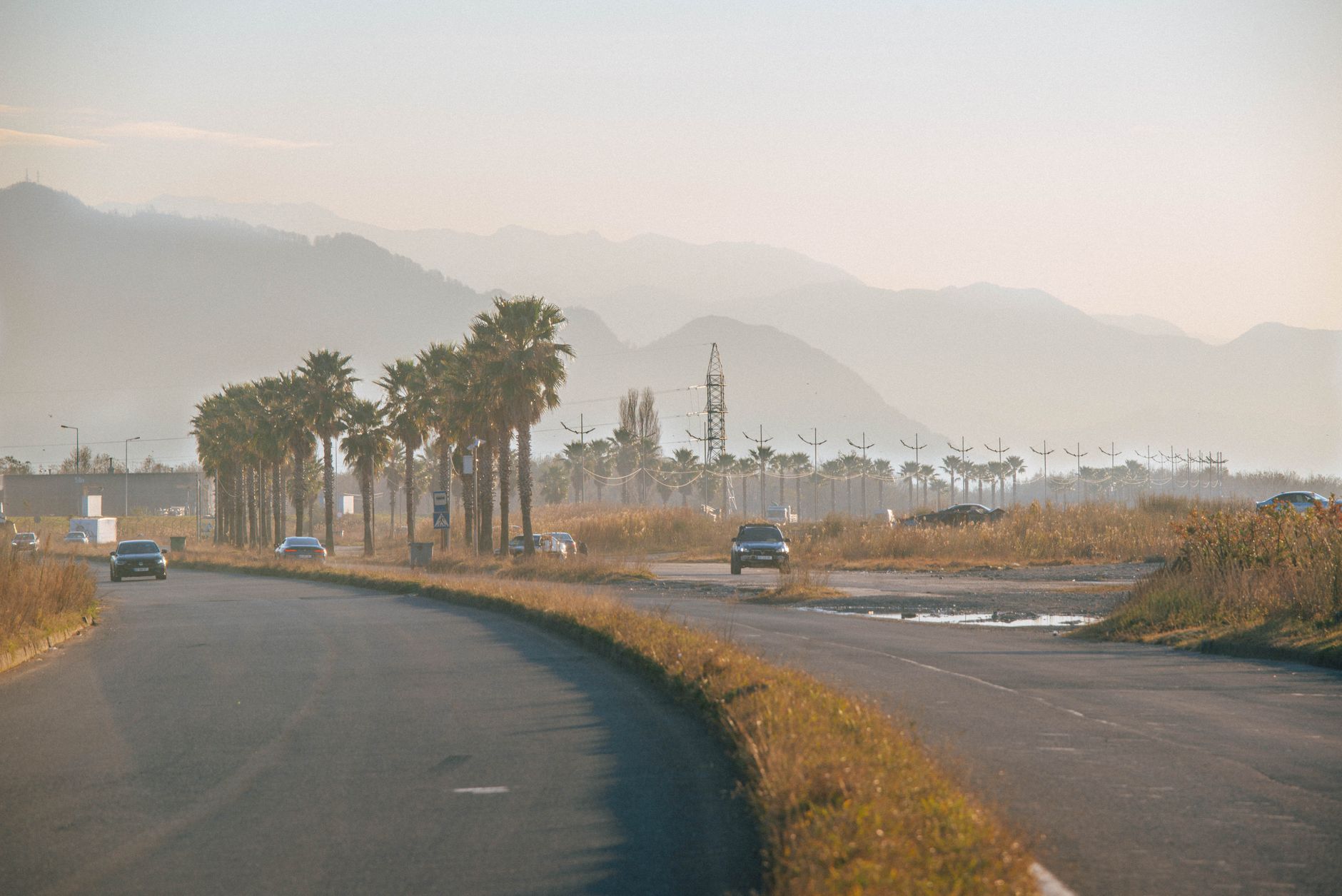
Palma is pleasantly unlike most holiday airports. There is a proper scheduled bus into town, taxi fares are regulated, and nobody at the exit tries to talk you into a flat price three times what the meter would show.
That does not mean every option suits every destination. Mallorca is larger than it looks on a map, and for transfer purposes the island divides very cleanly into two halves: Palma and its surroundings — and everywhere else.
Bus lines A1 and A2
The airport has two dedicated bus lines, and the split is simple.
Line A1 runs from the airport into central Palma and the old town, calling at Plaça d’Espanya and Paseo Mallorca among others. The journey takes about 20 to 25 minutes.
Line A2 serves S’Arenal and Playa de Palma — the large hotel belt east of the city.
The fare sits in single-figure euros; around €5 has been quoted most recently (as of 2026). Tickets come directly from the driver. Have small notes or a card ready, which speeds boarding considerably — on a summer afternoon with three flights just landed, that is no detail.
My view, plainly: if your destination is Palma or Playa de Palma, the bus is the sensible choice. Five euros against twenty-five plus, for twenty minutes’ difference — that adds up even if you do not particularly like buses.
Where the bus fails: with a great deal of luggage, with small children after a night flight, and for anywhere not on the A1 or A2 route.
The taxi and its rules
And now the part that separates Mallorca from Turkey or Egypt: taxi fares are regulated, and you do not have to negotiate.
Three figures are worth knowing (as of 2026).
There is an official airport supplement of €4.65 per journey. It belongs on the bill and is not a trick.
There is effectively a minimum fare from the airport of around €16.95, whatever your destination. Even a very short hop costs that.
For the journey into central Palma — about ten kilometres — reckon on roughly €25 to €35 by day and €30 to €40 at night and on public holidays. Supplement included, traffic depending.
One point that pleasantly surprises travellers: luggage is free. Suitcases and pushchairs carry no surcharge. That is by no means universal in Europe, and it makes taxis considerably more attractive for families than the base fares suggest.
What you should still do is glance at the meter and check it is running. Not because fraud is widespread, but because it is the simplest check there is. How a taxi fare is put together in general is set out in taxi fares in Germany — the components are similar across Europe.
When the pre-booked transfer still wins
With infrastructure this good, the question is why you would pre-book at all. The answer is about distance.
The airport sits by Palma, in the south-west. A substantial share of the hotels does not. Alcúdia and Can Picafort in the north, Cala Millor and Cala Ratjada in the east are 60 to 80 kilometres away depending on the resort, and sometimes more.
For those destinations the same applies as in the Antalya airport transfer: beyond a certain distance a pre-booked transfer is not merely more comfortable but simply cheaper than a metered taxi. And the scheduled bus there generally means changing in Palma — with cases, after a four-hour flight, with children.
The rule of thumb I use: Palma and Playa de Palma by bus. Up to about twenty kilometres by taxi. Anything beyond that, book ahead.
What you are actually signing up to when you book ahead — the cancellation window, the free waiting time after a delayed flight, child seats — I have taken apart from five operators’ terms in booking an airport transfer.
Why the scheduled bus is not enough for the rest of the island
Mallorca has an island-wide intercity bus network connecting most of the larger coastal towns with Palma. On paper it will get you almost anywhere, and for day trips during your holiday it is genuinely usable.
For arrival it rarely serves. The reason is not quality but structure: the intercity lines run from Palma, not from the airport. So you land, travel into the city first, find the right stand and change — with cases, in the heat, after a flight.
For two people with rucksacks and plenty of time it is an option, and far cheaper than anything else. For everyone else it is the point at which the booked transfer earns its money.
If in doubt, check the last service of the day. If your flight lands at nine in the evening and the last bus to Cala Ratjada left Palma at eight, the question answers itself.
Night flights, child seats, luggage
Three details that influence the choice in practice more than the price difference does.
Late arrivals. Palma takes flights until late, and the cheap options thin out as the day goes on while the taxi runs around the clock — on the night tariff. If you land after midnight, decide beforehand rather than at the exit.
Child seats. In Spain they are required for small children. Taxis do not automatically carry one, and on a scheduled bus the question does not arise. If you are travelling with a toddler, state the requirement explicitly when booking a transfer — it is the only way to be sure of getting one. Spain does have a taxi exemption, but it runs only in urban traffic and only on the rear seat; how that compares with the German rule under § 21 StVO is set out under child seats in taxis.
Luggage. In a taxi it is free; on a bus it is a question of space. Four people with four large cases on a packed A2 in August is a poor idea whatever it costs.
The mistake package holidaymakers make
The same one as everywhere, and it costs the same: on a package holiday the transfer is usually already included.
Check your documents before adding anything. Where a transfer is included, they will also say where to find the operator’s representative — normally at a desk in the arrivals hall with the logo on it.
If you booked flight only, the transfer is yours to arrange. Then distance decides, not price.
Hire cars: a serious option on Mallorca
Unlike at many destinations, a hire car on Mallorca is not a side issue but, for many people, the better overall sum.
The island’s roads are good, the distances short, and anyone wanting to see more than one bay will struggle to get around without a car except at considerable cost in time. So price the hire car not against the transfer alone but against the transfer plus every excursion you would otherwise book.
Two caveats remain. In high season, parking is scarce in the coastal resorts and expensive in Palma. And stepping into an unfamiliar car straight off a night flight is a poor idea — better to take the transfer on the first evening and collect the car the next day.
What I would settle before flying
Exactly where your hotel is. Not the resort name but the distance from the airport in kilometres. It is the only figure from which the right kind of transfer follows.
Whether the transfer is already paid for. Two minutes in your travel documents.
When your flight lands. For very late arrivals the bus no longer runs at its usual frequency, and that is the moment a cheap option turns into a wait. Landing after midnight, plan on a taxi or a booked transfer.
How much luggage you really have. Two of you with hand luggage will manage the bus easily. Four of you with four cases will not, however cheap it is.
Do not forget the return
This goes wrong less often on Mallorca than elsewhere — because the bus runs regularly — but it still deserves attention.
If you are returning by booked transfer, the same rule applies as at any resort: pick-up is earlier than you think. Get the time confirmed a day or two ahead.
If you are returning by bus, allow for summer traffic on the Playa de Palma route. The A2 sits in the same queue as everybody else.
And if you are taking a taxi, order it through your hotel the evening before rather than flagging one down in the morning. It costs nothing extra and spares you the one situation on Mallorca where things still get fraught.
How the same question looks at a well-connected German airport is under Hannover Airport into town.
An island with no island-wide fixed-price table, but considerably greater distances between airport and resort, is Fuerteventura, covered under Fuerteventura airport transfer.
A destination with two airports instead of one, plus an official fixed-fare taxi system, is Rome, covered under Rome airport transfer.
On the Spanish mainland it’s not the airport but the terminal that decides your route into town – see Barcelona airport transfer.
All prices reflect the position in 2026. Bus and taxi tariffs on Mallorca are set by the authorities and adjusted regularly, as are night and holiday supplements. Check the current figures shortly before travelling. What holds is the island’s split: on the Palma side you need no booked transfer, on the other side you almost always do. More routes and fixed fares under Airport Transfer.
Keep reading
Airport Transfer
Rome Airport Transfer: Fiumicino, Ciampino, Train or Taxi?
Rome airport transfer 2026: Leonardo Express for €14, fixed taxi fares from €40 or €55, the Ciampino Airlink for €2.70 — two airports, two systems.
Jonas Reinhardt18 July 2026
Airport Transfer
Fuerteventura Airport Transfer: Taxi, Bus or Car Hire?
Fuerteventura Airport in 2026: metered taxis, no flat-fare list, bus line 3 to the terminal — and why Corralejo, Costa Calma and Morro Jable differ hugely.
Jonas Reinhardt15 July 2026
Airport Transfer
Hurghada Airport Transfer: What the Ride to Your Hotel Really Costs
Transfers from Hurghada (HRG) in 2026: operator-published prices for shared shuttles and private cars, distances to Makadi Bay, El Gouna and Soma Bay — and what happens at a taxi rank with no working meter.
Jonas Reinhardt17 September 2026
Airport Transfer
Kuala Lumpur Airport Transfer: KLIA Ekspres, Grab or the Coupon Desk?
Transfers from Kuala Lumpur in 2026: the KLIA Ekspres at RM 55 in 28 minutes, Grab from the right door, the fixed-price taxi desk, and the KLIA2 trap for AirAsia passengers.
Jonas Reinhardt17 September 2026
Airport Transfer
Antalya Airport Transfer: What You Should Actually Pay
Transfers from Antalya airport in 2026: prices to Belek, Side and Alanya, the tram and Havas bus into town — and why a lot of people pay twice.
Jonas Reinhardt14 August 2026