Taxi in Kassel: Germany's Simplest Tariff — and Its Dearest Airport Run
Kassel has no night surcharge, no distance tiering and no fixed-price corridor — just two numbers. Since mid-June 2026 one of them has risen by a third, which makes northern Hesse dearer per kilometre than Frankfurt.

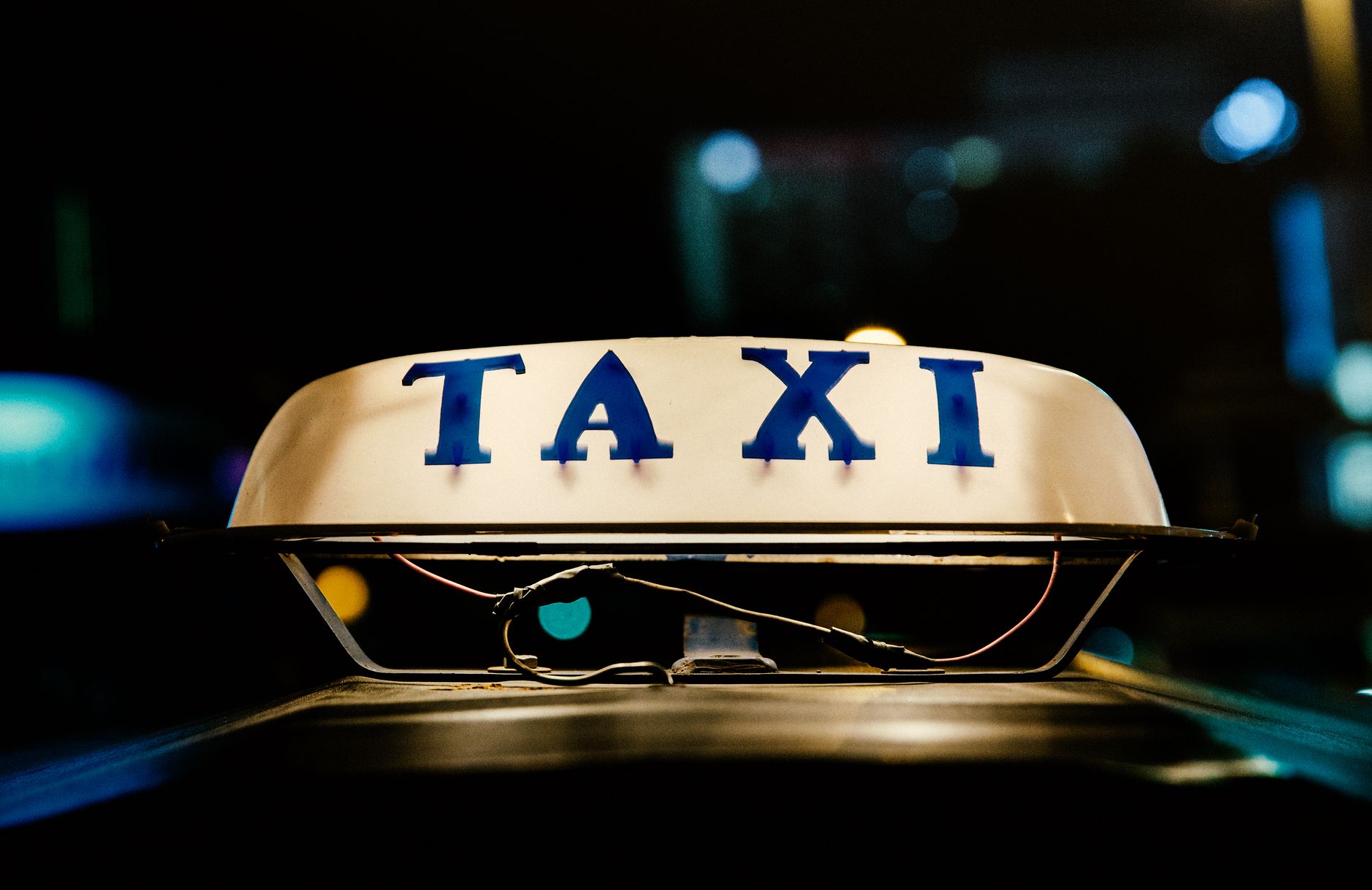
Most of the taxi ordinances I have read for this series need two pages of tables: tier thresholds, time zones, fare corridors, fixed route prices. Kassel needs two numbers. Four euros to start, €2.80 a kilometre. That is the whole tariff. No step at kilometre eight as in Munich, no drop at kilometre nine as in Hamburg, no night rate, no app fixed price, no fare zones.
It is refreshingly honest, and it has one uncomfortable consequence: nothing slows the meter down on a long run. Every kilometre costs the full rate, first to last. And since mid-June 2026 that rate has been noticeably higher than it was in the spring.
The Kassel tariff as it stands in 2026
The basis is the city’s ordinance on taxi fares and conditions of carriage, dated 13 October 2014, currently in the version of the Third Amendment of 27 April 2026, which took effect on 13 June 2026.
| Item | Price |
|---|---|
| Base charge | €4.00 |
| Each occupied kilometre | €2.80 |
| Waiting time | €36.00 an hour |
| Minivan (more than 5 seats) | €6.00 once |
| Larger boot on request | €6.00 once |
| Handling fee per invoiced trip | €3.00 |
Waiting time is set at €36 an hour in the ordinance; on the meter it ticks over in ten-cent steps every ten seconds. That works out at 60 cents a minute — ten minutes stuck on Frankfurter Straße costs you six euros without covering any ground.
The clause worth knowing is the second paragraph of section 2: the fares set out are fixed prices that may be neither exceeded nor undercut. Inside the compulsory service area a driver may not add a premium and may not grant a discount. Anyone offering you a flat price for a city run at the rank is doing something the ordinance does not provide for.
What the June 2026 jump actually costs you
Until 12 June 2026 the kilometre rate was €2.10. It is now €2.80 — a third more, while the base charge stayed at four euros. The city justified the move with fuel prices that had climbed sharply in a short period and had pushed up local operators’ running costs. The manager of the Kassel taxi despatch centre gave Hessischer Rundfunk a figure that makes the squeeze more tangible than any percentage: the number of affiliated vehicles had fallen from 96 to 73 over the course of the year.
Because the tariff is linear, you can do any fare in your head — four euros, plus 2.80 times the distance. This is the table worth memorising:
| Distance | Old tariff (to June 2026) | Now |
|---|---|---|
| 3 km | €10.30 | €12.40 |
| 5 km | €14.50 | €18.00 |
| 10 km | €25.00 | €32.00 |
| 15 km | €35.50 | €46.00 |
| 20 km | €46.00 | €60.00 |
All on a clear run, with no waiting time. And here is where Kassel slips into an unfamiliar role: Frankfurt is cheaper. The banking city has also run a flat tariff since 2023, but at €2.40 a kilometre on the same four-euro base. Ten kilometres there costs €28 rather than €32, twenty kilometres €52 rather than €60. How that Frankfurt tariff is built, fixed-price corridor and a compulsory area reaching as far as Hanau included, is set out under taxi fares in Frankfurt. A northern Hessian city of roughly 200,000 people charging more per kilometre than Frankfurt is not an arithmetic slip — it is what two very different tariff rounds produced.
The next comparison is kinder. Hanover has exactly the same €2.80 kilometre rate but a €4.50 base. Kassel is therefore precisely 50 cents cheaper than Hanover over any distance you care to name — no more, no less, because the rest of the sum is identical. Why Hanover’s tariff nonetheless behaves differently, and reaches beyond the city limits, is covered under taxi fares in Hanover.
One thing stands out from the averages. Over three kilometres you pay €4.13 a kilometre including the base charge; over twenty you still pay €3.00. That spread is far narrower than in a tiered tariff, where the average falls away sharply on long runs. In Kassel the long journey barely gets proportionally cheaper — which is exactly why the trip out to Calden further down hurts.
The compulsory service area: five municipalities, one with an airport
The ordinance does not cover the city alone but five municipalities: the city of Kassel, the town of Vellmar, and the parishes of Niestetal, Espenau and Calden. Within that area drivers are obliged to carry you, the official tariff applies, and the approach to the pickup point is not charged — the meter may not be switched on before the address you gave, and on a pre-booking not before the agreed time.
The list is shorter than people expect. Baunatal, with its large Volkswagen plant, is not on it. Lohfelden, Kaufungen, Fuldatal, Ahnatal, Habichtswald — all outside. Travel from central Kassel to one of those and you leave the compulsory area, at which point the tariff stops binding: the price becomes a matter of agreement, and it should be agreed before you get in, not on the doorstep. That is not a grey zone, simply the territory the municipal ordinance does not regulate.
The odd one out on the list is Calden. The parish hosts Kassel Airport, and because it sits inside the compulsory area the run out there goes on the meter at the ordinary tariff — no zone supplement, no special rate, nothing to negotiate. That sounds passenger-friendly, and it is about to become the most expensive item in this article.
Taxis at Wilhelmshöhe station, where almost everyone arrives
Arrive in Kassel by ICE and you do not get off at the Hauptbahnhof. Kassel-Wilhelmshöhe opened on 29 May 1991, alongside Germany’s first high-speed services, and has taken long-distance traffic off the old terminus entirely; the Hauptbahnhof now handles regional trains and the RegioTram. In practice, nearly every arrival from out of town ends at Wilhelmshöhe, in the west of the city — around four kilometres from Königsplatz.
The rank sits at the main entrance, with a second one on the west side of the ICE station. The sum for the run into town: about 3.9 kilometres, so €4.00 + 3.9 × €2.80 = just under €15. The tram covers the same ground on a €3.40 single (Stadt Kassel fare zone, as of 2026). Travelling alone with a cabin bag, the tram wins easily; three of you with suitcases and it tips the other way, because the fare does not rise with the number of passengers.
The other direction is more interesting. The station stands on Wilhelmshöher Allee, a dead-straight axis laid out from 1767 on the landgrave’s orders, running some 4,565 metres from the city centre to Schloss Wilhelmshöhe in the UNESCO-listed Bergpark. On foot or by tram you follow that straight line; a taxi does not quite, because the approach to the palace terrace loops around. From the station to the palace the meter shows roughly six kilometres and around €20. All the way up to the Herkules monument it is just under eight kilometres and around €26 — a climb of some 300 metres, and on fountain days the one occasion here where I would actually reach for a taxi.
The water features run from 1 May to 3 October on Wednesdays, Sundays and public holidays from 14:30, free of charge. On those afternoons the car parks by the Bergpark are reliably full, and the sensible answer is the old one: leave the car on the edge and ride in. How park and ride is organised across German cities, and what marks out a site worth using, is set out there systematically — Kassel runs the principle from several tram termini.
The taxi to Kassel Airport: the number that surprises people
Here is the figure that reliably catches people out. Kassel Airport (IATA: KSF) lies near Calden, about 13 kilometres north-west of the centre as the crow flies, and 15 to 18 road kilometres via the B7 and Rasenallee depending on where you start.
On the meter that means:
- from Wilhelmshöhe station, around 15.4 km: €4.00 + 15.4 × €2.80 ≈ €47
- from the Hauptbahnhof, around 17.5 km: €4.00 + 17.5 × €2.80 ≈ €53
Both without waiting time, and about twenty minutes on a clear run. Under the old tariff the same trip from Wilhelmshöhe would have cost roughly €36 — the June increase lands with an extra eleven euros here precisely because a flat tariff discounts nothing on distance. If you want to check the road distance for your own route, Routefare’s airport taxi calculator works out distance, drive time and an indicative fare.
The alternative costs €4.40. Bus route 100 runs from Wilhelmshöhe station via the Hauptbahnhof and Königsplatz out to Calden-Flughafen in about half an hour, on a KasselPlus single. Fifty euros against four forty is the widest taxi-to-bus ratio I have come across in this series, and it is not the taxi’s fault: the airport is simply a long way out and the bus is unusually well timed.
The second half of the surprise is the airport itself. It handled roughly 83,000 passengers in 2024, and since Sundair withdrew the aircraft it had based there, Calden has had no settled scheduled or holiday programme. People who live in Kassel and want to fly generally take the ICE onward — Hanover is just under an hour, Frankfurt a little over an hour and a half. What the arrival at Hanover looks like, gate to S-Bahn, is walked through in the Hanover Airport arrivals guide. So a fifty-euro taxi to Calden is most likely a charter, a business flight or a pickup — not the start of a summer holiday.
documenta: 2026 is not a documenta year
Kassel carries “documenta city” in its official name, and every five years the exhibition turns the place into an international destination for a hundred days, with the taxi shortages, full hotels and long station queues that go with it. That is the standard warning in every Kassel guide — and for this year it is simply wrong.
documenta 16 runs from 12 June to 19 September 2027, curated by Naomi Beckwith. Which means that in autumn 2026 the Kassel taxi trade is operating entirely normally. No special pricing, no shortages, no need to pre-book. If you are planning for 2027, put that window in the diary: for a hundred days you will be competing with several hundred thousand visitors for the same 73 vehicles, and booking ahead for an early run back to Wilhelmshöhe stops being over-cautious.
Surcharges: a short list, and one of them avoidable
Pleasingly brief. Luggage is free, animals are free — the ordinance explicitly rules out surcharges for carrying objects and animals. There is no night surcharge, no weekend surcharge and no public holiday surcharge.
Three items can still appear. Six euros for a minivan with more than five seats, payable once more than four passengers travel or once such a vehicle is specifically requested. Another six euros if you specifically order a car with a larger boot, an estate for instance, or one with folding rear seat backs — the charge hangs on the explicit request, not on an estate happening to turn up. And three euros’ handling fee on an invoiced trip, where the fare is billed later rather than settled at the end of the journey. Every surcharge must be shown on the meter.
A fourth item sits in section 6 and catches only the careless: book a taxi and then fail to use it, and you owe the base charge — plus any waiting time that accrued. Four euros is survivable; twenty minutes of waiting time on top rather less so.
On payment: the ordinance does not mandate card acceptance, unlike the tariff rules in Munich or Frankfurt. Cards are widely taken in Kassel but not guaranteed. Ask as you get in, not as you get out. A receipt is yours on request in every case, with the route, the vehicle’s registration number and the operator’s business address — that is section 8, and on a business trip it is half the battle.
Which leaves the calculation that matters day to day. Kassel’s flat tariff keeps short hops tolerable and lets long runs climb unchecked. Under three kilometres take the tram; from three people with luggage take the taxi; and to Calden take the bus, unless someone else is paying. How this kind of tariff scales up over a genuinely long journey, and why flat rates look worst of all there, is worked through under what a 50km taxi ride costs; the logic behind the municipal differences generally is under taxi fares in Germany. And if the ICE carries you further south: what a Frankfurt taxi actually costs is broken down in the Frankfurt taxi cost guide. All figures reflect the position in 2026; the Kassel ordinance was last amended in June 2026, and a copy of the tariff is carried in every vehicle. More cities are under Cities, and further pricing topics under Taxi & Fares.
Keep reading
Taxi & Fares
Taxi Nuremberg: the Tariff Since June 2026 and What Rides Really Cost
Nuremberg taxi fares 2026: a €4.90 minimum fare, €5.10 for the first kilometre, then €2.70 and €2.20, €40 an hour waiting time – with worked fares to the trade fair, the airport and the Documentation Centre.
Jonas Reinhardt25 September 2026
Taxi & Fares
Taxi Cologne: What a Ride Costs and Why the Tariff Reaches Düsseldorf
Cologne taxi fares 2026: a €4.90 base fare, a flat €2.90 per kilometre, 60 cents a minute waiting – with worked fares to the trade fair, Cologne Bonn Airport and the rise already set for March 2027.
Jonas Reinhardt25 September 2026
Taxi & Fares
Taxi Düsseldorf: What a Ride Costs and Where the €25 Fixed Fare Applies
Düsseldorf taxi fares 2026: a €5 base fare, €2.70 per kilometre, €43 an hour waiting, a €2 airport supplement and a fixed price between the airport and the trade fair – with worked fares across the city.
Jonas Reinhardt25 September 2026
Taxi & Fares
Taxi Leipzig: What a Ride Costs Under the 2026 Tariff
Leipzig taxi fares 2026: a €4.50 base fare, €3.30 per km for the first three kilometres, then €2.40 and €2.20, €40 an hour waiting – with worked fares to the trade fair, the Red Bull Arena and Leipzig/Halle Airport.
Jonas Reinhardt25 September 2026
Taxi & Fares
Taxi Hanover: What the Ride Costs and Why One Tariff Reaches Past the City Limits
Hanover taxi tariff 2026: €4.50 base fare, €2.80 per kilometre, €35 an hour waiting, no night surcharge – and fixed prices bookable by app since September 2025.
Jonas Reinhardt5 August 2026