Taxi Fares on Lanzarote: The Tariff That Actually Applies at the Airport
The airport sits in San Bartolomé, your hotel in Tías, Teguise or Yaiza. In the Canaries every municipality sets its own taxi tariff — which is precisely why the meter that starts at the terminal runs on a tariff none of those municipalities voted for.

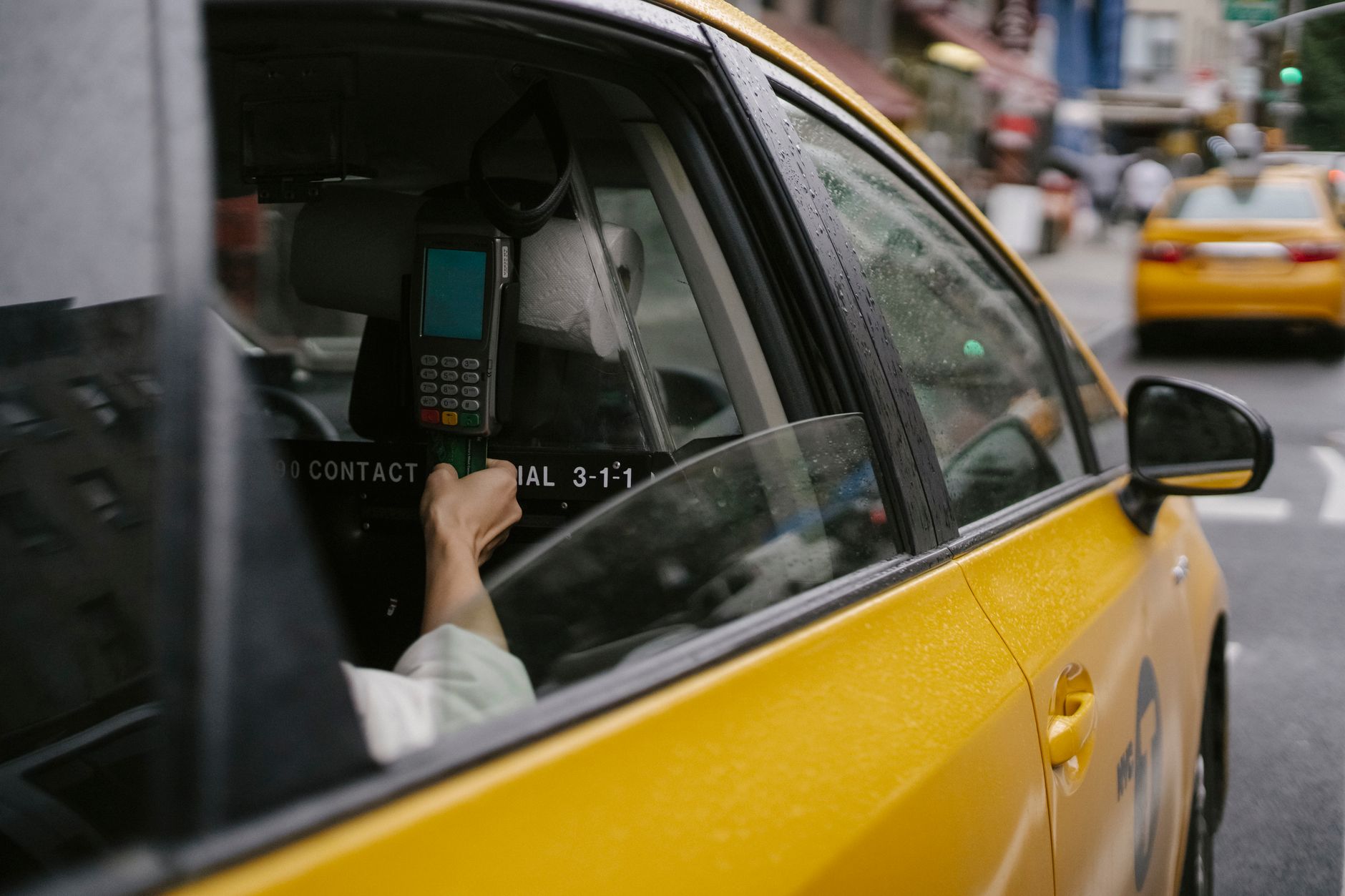
I had this one wrong myself until I went and read the source documents. Which taxi tariff actually applies when you get into a cab at Aeropuerto César Manrique-Lanzarote? The obvious answer is “Arrecife’s” — the island capital is less than five kilometres away, and its town hall put its taxi rates up as recently as December 2024.
The obvious answer is wrong, and wrong twice over. The airport is not in Arrecife at all: it stands in the municipality of San Bartolomé, roughly five kilometres south-west of the capital. And even San Bartolomé’s own tariff is irrelevant to almost every journey that starts at the terminal.
The tariff that really runs at the airport
Aena, which operates the airport, publishes the applicable rates on the airport’s own taxi page. They look like this (as of 2026):
| Item | Tariff 1 | Tariff 2 |
|---|---|---|
| Minimum charge | €3.85 | €4.25 |
| Per kilometre | €1.35 | €1.55 |
| Hour waiting | €18.50 | €18.50 |
| Airport or port supplement | €2.10 | €2.10 |
| Radio or app booking | €0.60 | €0.60 |
Tariff 1 covers weekdays from 06:00 to 22:00. Tariff 2 applies at night between 22:00 and 06:00, and all day on Sundays and public holidays — mid-afternoon sunshine included. On Christmas Eve, New Year’s Eve and the evening of 5 January, the night before Epiphany, the minimum charge climbs to €6.54.
What matters about that table is not the size of the numbers but where they come from: they are the exact same figures Aena publishes for Gran Canaria Airport. That is not a coincidence or a copy-paste slip. These are the Canary Islands interurban rates, set by the regional government for the whole archipelago — not a Lanzarote price, and certainly not an airport price.
Arrecife to the airport: why the town tariff has no say
Competence is set out in article 17 of the Canary taxi regulation (Decreto 74/2012). The wording, quoted by Arrecife’s own town hall in its 2024 fare decision, leaves no room: urban tariffs are fixed by the municipality concerned, while the interurban tariffs are fixed by the Canary government — along with the tariffs for joint-service zones and for so-called “sensitive areas”.
Urban means the journey stays inside one municipality from start to finish. An airport run essentially never does. Puerto del Carmen is in Tías, Costa Teguise in Teguise, Playa Blanca in Yaiza, Arrecife is a municipality of its own — and the airport itself sits in San Bartolomé. Every one of those routes crosses a municipal boundary and is therefore interurban. The town tariff simply does not apply.
How different those town tariffs would be is laid out in a comparison table published with Arrecife’s economic study in December 2024. The per-kilometre rate there was €0.63 in San Bartolomé, Haría and Tinajo, €0.70 in Arrecife, Teguise and Tías, and €0.75 in Yaiza — around half the interurban rate of €1.35. This is not pedantry about jurisdictions; it is the difference between one fare and roughly double it.
A neat piece of corroboration in passing: Arrecife’s old fare schedule includes a €1.20 supplement for “entries and exits at the Muelle de los Mármoles” — and no airport supplement at all. The port is in Arrecife. The airport is not.
It gets practical one rung further down. Only taxis licensed in San Bartolomé may currently pick up at the airport. A Tías cab will happily drive you from Puerto del Carmen to the terminal, but it may not wait there for the next fare. That explains the peak-hour queues better than any complaint about “not enough taxis”.
The airport supplement: €2.10, in both directions
Unlike its neighbouring island, Lanzarote has a published supplement for journeys to and from airport and port grounds: €2.10, once, regardless of distance. On the run to Playa Blanca you will barely notice it; on the four kilometres to Playa Honda it is a visible slice of the bill.
Fuerteventura’s meter runs with no published terminal supplement, as I set out in the Fuerteventura airport transfer. Two islands, 130 kilometres apart, different rulebooks: in the Canaries that is the norm, not the exception.
Puerto del Carmen: the distance, and what the meter makes of it
Puerto del Carmen is by far the most common destination from the terminal. The run is roughly twelve kilometres — the Matagorda end of the resort starts after nine.
Worked through on the official rates, Tariff 1:
| Destination | km | Sum | Meter |
|---|---|---|---|
| Arrecife centre | 8 | €3.85 + 8 × €1.35 + €2.10 | €16.75 |
| Puerto del Carmen | 12 | €3.85 + 12 × €1.35 + €2.10 | €22.15 |
| Puerto Calero | 16 | €3.85 + 16 × €1.35 + €2.10 | €27.55 |
| Costa Teguise | 17 | €3.85 + 17 × €1.35 + €2.10 | €28.90 |
| Playa Blanca | 36 | €3.85 + 36 × €1.35 + €2.10 | €54.55 |
Two honest caveats before you read those as quotations. The airport’s table lists €3.85 as a minimum charge and does not say whether an initial stretch of road is included; if it is, every line above sits about €1.35 high. And the distances are town centres, not hotel addresses — Puerto del Carmen strings itself along several kilometres of seafront.
Travel sites quote rounded figures of about €25 to Arrecife, €27 to Puerto del Carmen and €58 to Playa Blanca. The long one tallies with my arithmetic; the short ones sit above it — plausible, since over eight kilometres every red light ticks over on the waiting clock. How flag-fall, per-kilometre rate and waiting time add up to a fare is covered in taxi fares in Germany. For scale: €1.35 a kilometre sounds steep, but it undercuts what a German city charges — what a Frankfurt taxi costs per kilometre is the direct yardstick.
Costa Teguise and Playa Blanca: the longer runs
Past about twenty kilometres the decision tips. Playa Blanca lies some 36 kilometres from the terminal, and on Tariff 2 the identical journey costs not €54 but a good €62 (€4.25 + 36 × €1.55 + €2.10). A fifteen per cent uplift is a tip on a short hop and a dinner on a long one. Costa Teguise sits between the two at 17 kilometres: around €29 by day, just under €33 on Tariff 2.
For two people that is decent value, for four it is excellent. Travelling alone on the long southern runs I would rather book a transfer in advance, because there the price is settled before you get in — what to check when booking one is under booking an airport transfer.
Sundays and public holidays are charged at the night rate
This catches people out on Lanzarote precisely because British and German taxi tariffs do not work this way: Sundays and public holidays run on Tariff 2 all day. Not from ten at night — from midnight. Minimum €4.25 instead of €3.85, kilometres at €1.55 instead of €1.35.
On top of the Spanish public holidays the Canaries add regional ones, Día de Canarias on 30 May among them. And if you want a receipt: Aena’s own advice is to take a cab only from the official rank and to ask for a bill in case of any dispute. The ranks are at Terminal 1 and Terminal 2, floor 0, in arrivals.
Fixed airport fares on Lanzarote: what exists and what does not
Here is where most of what you will read online goes wrong. There is no official flat fare from the airport to the resorts on Lanzarote. The Canary regulation does provide the instrument — the responsible minister may set interurban flat fares at a municipality’s request — but no such schedule has been published for Lanzarote. Mallorca handles this differently, and the difference is substantial: see the Mallorca airport transfer.
What circulates instead is two other things. First, quotes from private transfer firms, who are of course free to name a fixed price — but that is a chauffeured hire car, not a taxi tariff. Second, a price list from the San Bartolomé taxi cooperative for pre-booked journeys. That list is genuine and the closest thing to an official source for rounded route prices — except that the version findable online is headed “Temporada 2012/013”. Fourteen years old: excellent as a distance table, useless as a price list.
Its logic is worth reading anyway. Pre-booked journeys on that list are explicitly dearer than taking a cab off the rank, plus 3% IGIC and 1% handling. A “fixed price” on this island is not the bargain option — it is the premium you pay for certainty.
What is changing in 2026: the airport as a sensitive area
In July 2026 the Cabildo of Lanzarote and La Graciosa set a regulation for “sensitive areas” in motion, naming César Manrique Airport and the port of Arrecife-Los Mármoles as the first two. The draft appeared in the Las Palmas provincial gazette no. 85 of 17 July 2026, with objections open until 24 August 2026. Whether final approval has since been granted I could not establish, so treat the position as live.
The declaration would do two things. Taxis from other island municipalities could pick up at the airport during peak demand, temporarily and on a reasoned decision. And in tariff terms a sensitive area is exactly the case where article 17 hands rate-setting to the Canary government — competence moves further from the town hall, not closer. That the island needs such a mechanism has history behind it: in 1983 all seven Lanzarote municipalities formed a joint taxi authority, which later stopped functioning; Arrecife took its own competences back in 2020.
What Lanzarote taxis cost in practice: luggage, boards, cards
Three things that reach the bill without appearing in the tariff summary.
Bulky luggage. The cooperative’s list says it plainly: for excess baggage, bicycles, surf, kite and windsurf boards or pet carriers that have to go on the roof rack, a supplement may be charged according to quantity and volume. Ask the price before the boot opens. If you are travelling with a board you are paying twice for the same problem anyway — what excess baggage costs at the airline is usually the larger of the two.
The waiting clock. €18.50 an hour is about 31 cents a minute, and it runs in traffic exactly as it does while you load. Through the middle of Puerto del Carmen in high season, that is noticeable.
Paying. Cards work in the large majority of vehicles but are not guaranteed. Asking as you get in saves hunting for a cash machine in Yaiza.
And one more sum nobody does on the outbound leg: the priciest drive of the trip is often not the one on Lanzarote but the one to your departure airport. A fortnight in the terminal car park can cost several times the Playa Blanca fare — what parking at the German airports actually costs is worth comparing beforehand, and how far and how expensive the drive there is can be worked out to the kilometre.
All amounts reflect the position in 2026 and come from the airport operator’s fare summary and from Arrecife town hall’s December 2024 tariff decision; distances are rounded road kilometres from the terminal. The rule that will still hold after the next rate rise, though, is not a number: at Lanzarote’s airport the tariff is not the one set by the town next door but the interurban tariff of the Canary Islands — and knowing that is how you spot a wrong fare before you pay it. More tariffs and worked examples are under Taxi & Fares.
Keep reading
Taxi & Fares
Taxi in Hamburg: The Cost, and Where the 9km Line Falls
Hamburg taxi fares in 2026: €4.50 base, €2.70 a kilometre and only €2.00 from kilometre nine — plus fixed prices, the minivan supplement and worked examples.
Jonas Reinhardt14 August 2026
Taxi & Fares
Taxi Fares in Germany: Why Every City Sets Its Own Price
Taxi fares in Germany: who sets the prices, how a fare is built up, and why the base fare in Berlin and Munich differs by nearly two euros.
Jonas Reinhardt14 August 2026
Taxi & Fares
Taxi Düsseldorf: What a Ride Costs and Where the €25 Fixed Fare Applies
Düsseldorf taxi fares 2026: a €5 base fare, €2.70 per kilometre, €43 an hour waiting, a €2 airport supplement and a fixed price between the airport and the trade fair – with worked fares across the city.
Jonas Reinhardt25 September 2026
Taxi & Fares
Taxi Nuremberg: the Tariff Since June 2026 and What Rides Really Cost
Nuremberg taxi fares 2026: a €4.90 minimum fare, €5.10 for the first kilometre, then €2.70 and €2.20, €40 an hour waiting time – with worked fares to the trade fair, the airport and the Documentation Centre.
Jonas Reinhardt25 September 2026
Taxi & Fares
Taxi Cologne: What a Ride Costs and Why the Tariff Reaches Düsseldorf
Cologne taxi fares 2026: a €4.90 base fare, a flat €2.90 per kilometre, 60 cents a minute waiting – with worked fares to the trade fair, Cologne Bonn Airport and the rise already set for March 2027.
Jonas Reinhardt25 September 2026