Taxi Lübeck: What a Ride Costs and Why the Travemünde Ferry Gets Billed Too
Lübeck is the only German city whose taxi ordinance carries its own clause for a ferry and a road tunnel, because one slice of town, the Priwall peninsula, is reachable only by water or a toll route. Miss that detail and the receipt to Travemünde comes as a surprise.

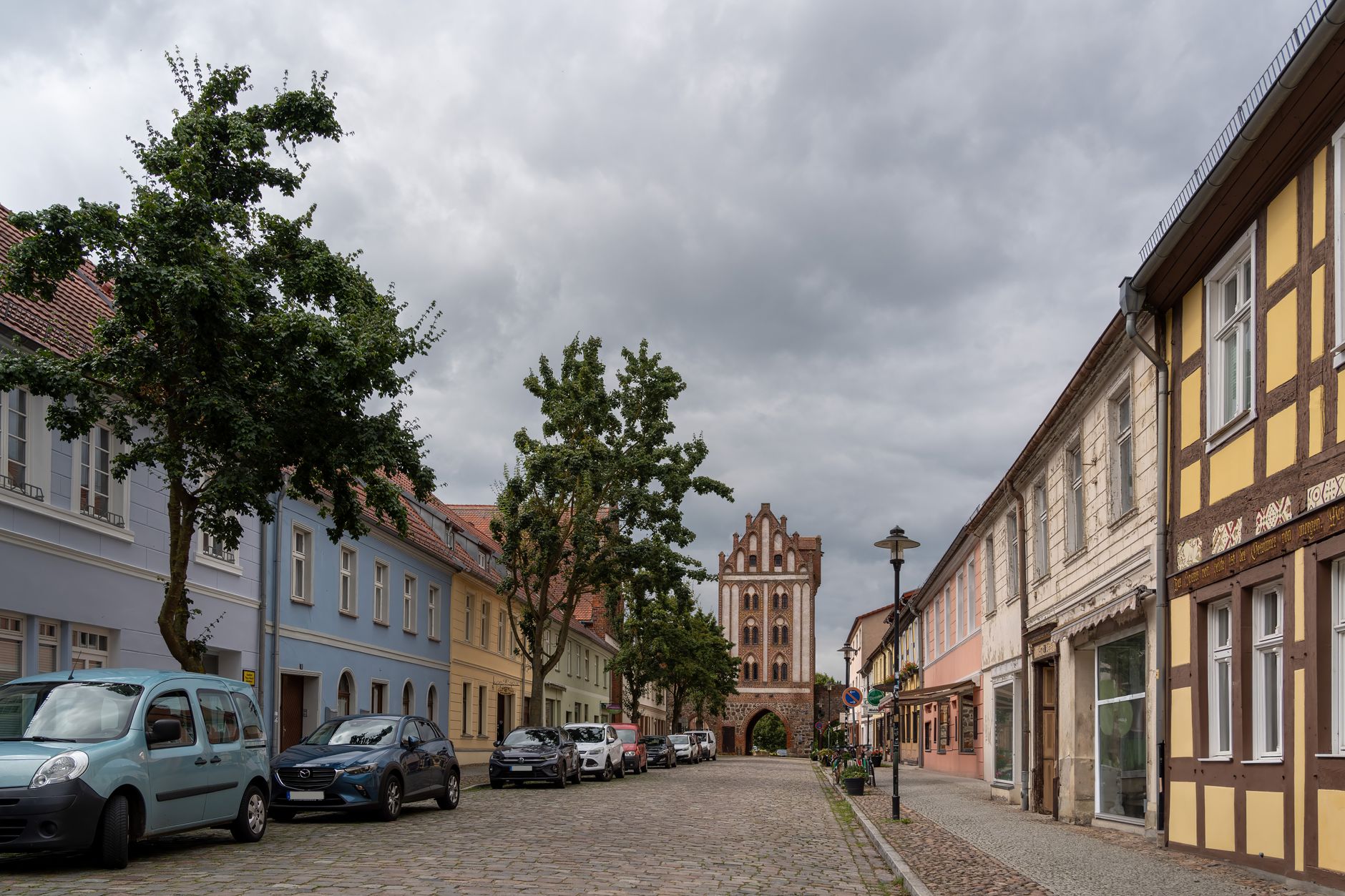
Few German cities have a taxi tariff that reads as blandly as Lübeck’s: a €4.10 base fare, €2.70 a kilometre for the first three kilometres, then €2.20 after that. And yet buried in the ordinance sits a clause no other city on this site has: take a taxi to the car ferry over to the Priwall, or through the Herrentunnel towards Travemünde, and you pay the ferry fee and the toll on top of the meter - written into a dedicated Section 3, “Special Rules for the Priwall and the Herrentunnel”. That’s not a quirk one driver invented; it’s municipal law. Lübeck, after all, is half Hanseatic old town with UNESCO status and half Baltic seaside resort with a ferry port, and its taxi tariff bakes in exactly that split personality.
Base Fare, Distance Rate and Waiting Time: The Tariff Since September 2022
The legal basis is the city’s ordinance on transport charges for occasional taxi services in the Hanseatic City of Lübeck, originally dated 22 September 2006 and last amended and republished on 1 September 2022, signed by the then-mayor Jan Lindenau. Section 1 spells out its reach: it covers taxi operators based in Lübeck, for journeys within the Hanseatic city’s territory. One detail you rarely see spelled out in a taxi ordinance: if the shortest, cheapest route to a destination inside Lübeck briefly clips a strip of land that technically no longer belongs to the city, the Lübeck tariff still applies to that stretch. It heads off any argument over a few hundred metres before it starts.
The base fare is €4.10. The distance rate is tiered: €2.70 per kilometre for the first three kilometres, then €2.20 after that, metered in 10-cent increments. What’s missing from the text is just as notable as what’s in it: no night surcharge, no weekend or public-holiday surcharge appears anywhere in the ordinance - Section 2(1) does formally mention “different tariff tiers (T1 and T2)”, but the text itself only ever spells out one set of figures for the base fare and the distance rate. If you know Freiburg’s taxi tariff, with its clearly split day and night rates, you’ll need to recalibrate in Lübeck: the per-kilometre rate at three in the morning is identical to the rate at three in the afternoon.
Three worked examples, base fare plus the distance tiers:
- 2 km - €4.10 + 2 × €2.70 = €9.50
- 5 km - €4.10 + 3 × €2.70 + 2 × €2.20 = €16.60
- 10 km - €4.10 + 3 × €2.70 + 7 × €2.20 = €27.60
Waiting time costs €0.60 per completed minute, which works out to €36 an hour - and, as everywhere, it keeps running in stationary traffic. For comparison, Hamburg charges around €38 an hour for the same standing time; Lübeck comes in just below it.
Minivan Taxis, the Estate-Car Surcharge and What Happens If You Don’t Show Up
Once a fifth passenger climbs aboard - the ordinance defines it through the vehicle itself, one “suited by design and equipment to carrying more than 5 people, including the driver” - a minivan taxi kicks in as soon as more than four passengers are riding. The surcharge is a flat €6.00, regardless of distance. Book an estate car instead, because your luggage is bulky or you specifically request one, and a €3.00 estate-car surcharge applies. The ordinance requires the driver to flag both surcharges to you before the journey starts, not just leave them to surface on the receipt.
The drive to pick you up is always free of charge, and Section 2(4) is explicit that the meter may only start once the driver has actually checked in with you. Luggage up to 25 kilograms travels free; anything beyond that - a fully loaded estate car headed for the ferry, say - can be separately agreed, though only as far as the boot genuinely allows. Weddings or funerals requiring special vehicle dressing can likewise be charged separately.
One clause worth knowing, because almost nobody does: Section 7 covers what happens if you book a taxi and then don’t use it, for reasons that are your own fault - forgetting about it, or leaving some other way. A flat €5.00 applies, covering the driver’s waiting time and the trip back to the rank. That’s noticeably gentler than cities where no-show fees run on the full time tariff.
Narrow Lanes, Protected Courtyards: Taxis in the World Heritage Old Town
Lübeck’s old town has carried UNESCO World Heritage status since 1987 - the first entire medieval town centre in northern Europe to receive it. Roughly three-quarters of the old town’s buildings survived the Second World War, unusual for a northern German city of this size. What that means for you as a taxi passenger comes down to one detail tour guides love to mention and drivers have to solve every day: the city’s characteristic Gänge and Höfe - narrow lanes and courtyards from the Hanseatic era, often barely a metre wide, built because the old town island between the Trave and Wakenitz rivers had nowhere left to expand - are pedestrian-only. If your address sits inside one of these lanes, the taxi won’t pull up at your front door; it’ll wait at the nearest street a car can actually reach, often just twenty or thirty metres away, but never zero.
Around the Holstentor, the city’s stone-built landmark, and through much of the pedestrian zone between Breite Straße and Königstraße, motorised traffic - taxis included - is banned outright during the day. Need a taxi from there, and your best bet is one of the official ranks at the edge of the old town, or a pre-booked pickup - the dispatcher knows exactly which nearby street still allows a stop, sparing you a wander through medieval alleys with a suitcase. Freiburg’s old town is also largely car-free, but flat and easy to read at a glance; Lübeck’s is an island ringed by water on every side, which means fewer access points, but ones that are easy to remember once you know where they are.
The Special Rule for the Priwall and the Herrentunnel: A Clause Unique to Lübeck
Now for the paragraph that sets Lübeck apart from every other city covered on this site. Section 3 of the ordinance is headed “Special Rules for the Priwall and the Herrentunnel” and covers two situations, both rooted in Lübeck’s unusual geography.
The Priwall is a good three-kilometre-long peninsula at the mouth of the Trave, home to holiday homes, campsites and a beach, separated from central Travemünde by the river’s mouth into the Baltic. A ferry has run there since 1253 - not an exaggeration. Today the municipal utility, Stadtwerke Lübeck Mobil, operates both a car ferry between Travemünde’s Auf dem Baggersand and the Priwall, and a separate foot-and-cycle ferry. Take a taxi to or from the Priwall, and under Section 3(1) you cover the ferry fee yourself, on top of the meter. The utility’s current rates, in force since 1 January 2026, stand at €5.10 for a car and €2.10 per adult foot passenger (as of 2026).
The second case concerns the Herrentunnel, which has run beneath the Trave since 26 August 2005, replacing the ageing Herrenbrücke bridge from 1964 - Lübeck’s most direct road link to Travemünde via the B75. If your driver takes the tunnel, the ordinance entitles you to be charged the toll “at the most favourable rate”, currently €2.30 for a car (as of 2026, in force since 1 March 2025). What doesn’t get passed on to you is the toll for any leg the taxi drives empty - the trip out to collect you, or the drive back once you’ve been dropped off; the operator absorbs that.
In practice: a ride from Lübeck’s old town to a holiday cottage on the Priwall can rack up two separate add-ons at once - the tunnel toll for the stretch towards Travemünde, and the ferry fare for the last few hundred metres across the water. For a family of four with luggage, it’s still cheaper than taking two taxis or hauling suitcases onto the ferry on foot - but it’s worth asking upfront which route the driver plans to take if you want to work out the total in advance.
Skandinavienkai: Germany’s Largest Baltic Ferry Port on the Doorstep
Travemünde itself sits around 17 kilometres from Lübeck’s old town, right where the Trave flows into the Baltic. The real reason so many Lübeck taxis head for the coast at all is Skandinavienkai - by its own account, Germany’s largest Baltic Sea ferry port. Two shipping lines dominate it: TT-Line sails from there to Trelleborg and Karlshamn in Sweden and to Klaipėda in Lithuania, with up to four daily departures split between day and overnight crossings; Finnlines serves Malmö and Helsinki, also with several sailings a day. The address for a taxi booking is Skandinavienkai 1, 23570 Lübeck-Travemünde.
From the city centre, the taxi ride to the terminal takes around 20 minutes. Arrive by train instead and you’ll land at Lübeck-Travemünde Skandinavienkai station, still roughly 2.5 kilometres on foot from the terminal itself - there’s been no through bus service linking station and terminal since December 2022. That gap is exactly what makes the taxi to the ferry more genuinely useful here than in a city with dense public transport: hauling suitcases along the access road for an early six-o’clock departure is a far less appealing prospect than a taxi booked the night before.
A rough figure for the drive alone, without any ferry leg, estimated at eight to ten kilometres depending on where in the city you start: €4.10 + 3 × €2.70 + 5 to 7 × €2.20 lands somewhere between €23 and €28. Split between two or three people travelling for a cruise or ferry crossing with luggage, that’s a price nobody in Lübeck really argues about - next to an airport run in a big city, it looks positively reasonable.
Lübeck Airport or Hamburg? The Maths for Travellers
Unlike Freiburg, Lübeck actually has its own airport - Blankensee, eight kilometres south of the city, reached via the A20’s Lübeck-Süd exit. Its history has been a rollercoaster: the last scheduled carrier pulled out in April 2016, and closure loomed for years. In August 2020, the city relaunched flights under its own airline, Lübeck Air, and in March 2025 Ryanair returned with routes to London Stansted, Málaga and Palma de Mallorca. Sundair adds seasonal Mediterranean holiday routes on top. A real airport with a real, if modest, route network - but nothing close to a major hub.
For anything beyond that handful of destinations, Hamburg remains the obvious alternative, around 65 kilometres away. Lübeck Airport was historically marketed as “Hamburg’s second airport”, and some budget carriers still list it as “Hamburg (Lübeck)” today. If you genuinely need the bigger airport - for long-haul or a denser route map - the A1 motorway is the way there, and the full breakdown of what a taxi costs once you arrive sits in Taxi Hamburg: what a ride costs. For the short hop to Lübeck’s own airport, a rough calculation on the local tariff does the job: eight kilometres from the centre works out to roughly €4.10 + 3 × €2.70 + 5 × €2.20 = €23.20, well under what an airport transfer costs in plenty of other German cities.
Uber, FreeNow and the Funktaxen Switchboard: How to Actually Get a Taxi in Lübeck
Call a taxi in Lübeck and you’ll almost always end up with the Lübecker Funktaxen switchboard, reachable on 0451-81122, based on Schützenstraße 20. The company has been dispatching taxis since 1976, round the clock, 365 days a year, and takes bookings both by phone and through its “Cab4me” app.
Uber has also been active in Lübeck since November 2024, running on the same model as everywhere else in Germany: the app brokers your ride to a licensed taxi or private-hire operator rather than carrying you itself. How that legal distinction between taxis and chauffeur-driven hire cars plays out across Germany is covered in detail in the overview of German taxi tariffs. FreeNow is also active in the city, mainly channelling bookings to the existing licensed taxi fleet.
The practical difference from Berlin or Hamburg comes down to scale. With around 217,000 residents (as of late 2025), Lübeck is the second-largest city in Schleswig-Holstein after Kiel - but still a city of that size, not a metropolis of millions. The pool of vehicles Uber and FreeNow can draw on is correspondingly smaller. Late at night, on a weekend when the ferry terminals are busy, or if your flight into Blankensee lands late, pre-booking through the Funktaxen switchboard is the more reliable option than opening an app and hoping.
Two numbers and one rule get you through Lübeck in the end: €4.10 before the taxi has moved an inch, and the three-kilometre mark where the per-kilometre rate drops from €2.70 to €2.20. The rule is Section 3 - the moment your route heads towards the Priwall or through the Herrentunnel, expect a ferry fare or a toll on top of the meter, no exceptions, just municipal law. The tariff itself has stood in this form since September 2022, and every figure in this article reflects the situation as of 2026 - though checking the tariff card in the vehicle never hurts, especially in a city that prices as much water into its taxi rates as this one does.
Keep reading
Taxi & Fares
Taxi Freiburg: What a Ride Costs and Why One Switchboard Is Enough
Freiburg taxi tariff 2026: a 5.00 euro base fare tiered to 3.50 and 2.50 euros per kilometre, one switchboard covering 21 firms, and fixed fares to Strasbourg, Basel and Zurich.
Jonas Reinhardt27 July 2026
Taxi & Fares
Taxi Hanover: What the Ride Costs and Why One Tariff Reaches Past the City Limits
Hanover taxi tariff 2026: €4.50 base fare, €2.80 per kilometre, €35 an hour waiting, no night surcharge – and fixed prices bookable by app since September 2025.
Jonas Reinhardt5 August 2026
Taxi & Fares
Taxi Cologne: What a Ride Costs and Why the Tariff Reaches Düsseldorf
Cologne taxi fares 2026: a €4.90 base fare, a flat €2.90 per kilometre, 60 cents a minute waiting – with worked fares to the trade fair, Cologne Bonn Airport and the rise already set for March 2027.
Jonas Reinhardt25 September 2026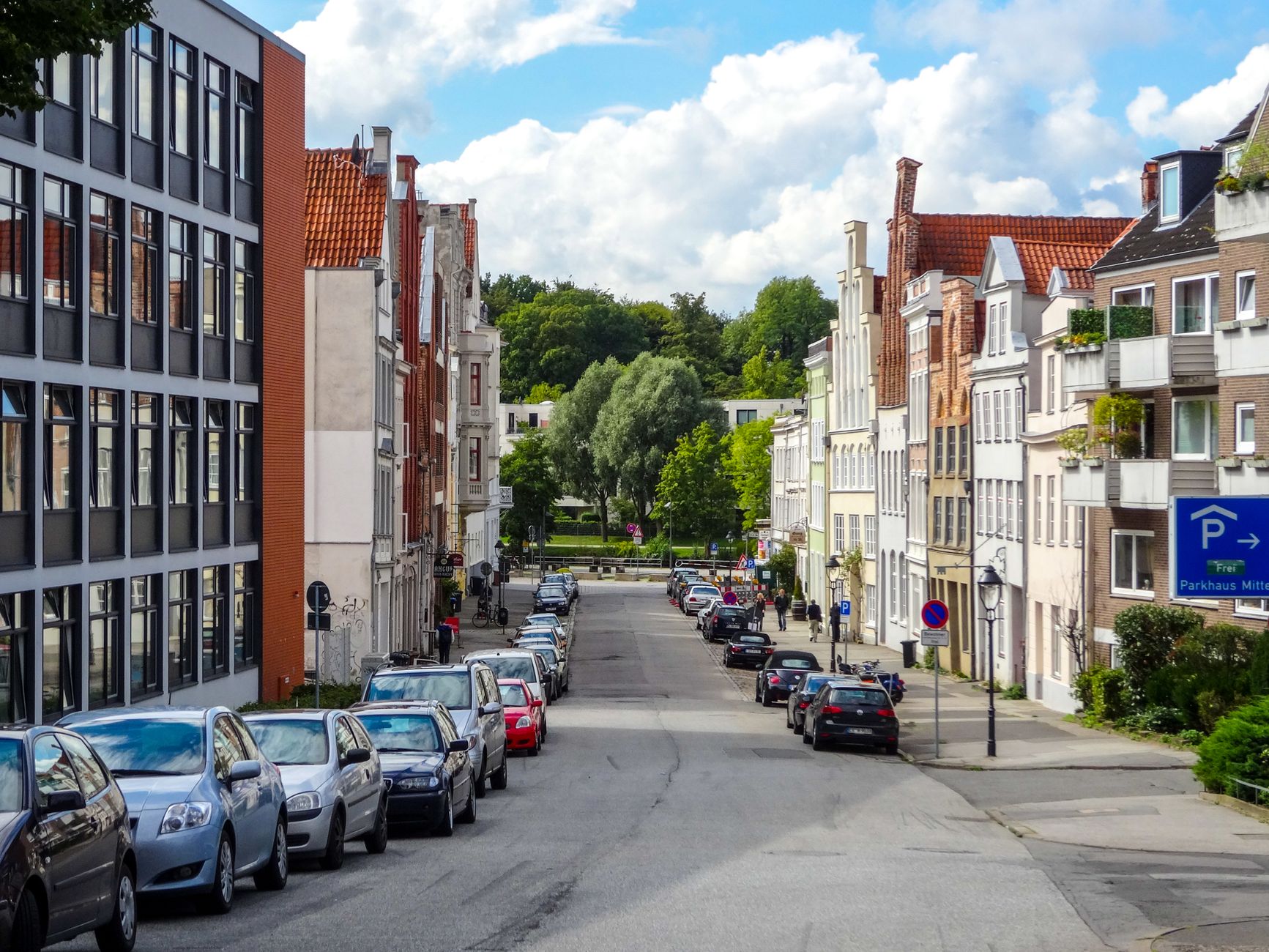
Taxi & Fares
Taxi Stuttgart: What the Ride Costs and Why the Basin Shapes the Fare
Stuttgart taxi tariff 2026: a €4.20 base fare, tapering €3.00 to €2.50 per kilometre, €38 an hour waiting – and how the basin shapes the price.
Jonas Reinhardt2 August 2026
Taxi & Fares
Taxi Düsseldorf: What a Ride Costs and Where the €25 Fixed Fare Applies
Düsseldorf taxi fares 2026: a €5 base fare, €2.70 per kilometre, €43 an hour waiting, a €2 airport supplement and a fixed price between the airport and the trade fair – with worked fares across the city.
Jonas Reinhardt25 September 2026