Taxi Freiburg: What a Ride Costs and Why One Switchboard Is Enough
Freiburg runs its taxis at small-city scale yet prices rides clear into France and Switzerland - one switchboard instead of a dozen apps, and a tariff that has barely moved since 2023.

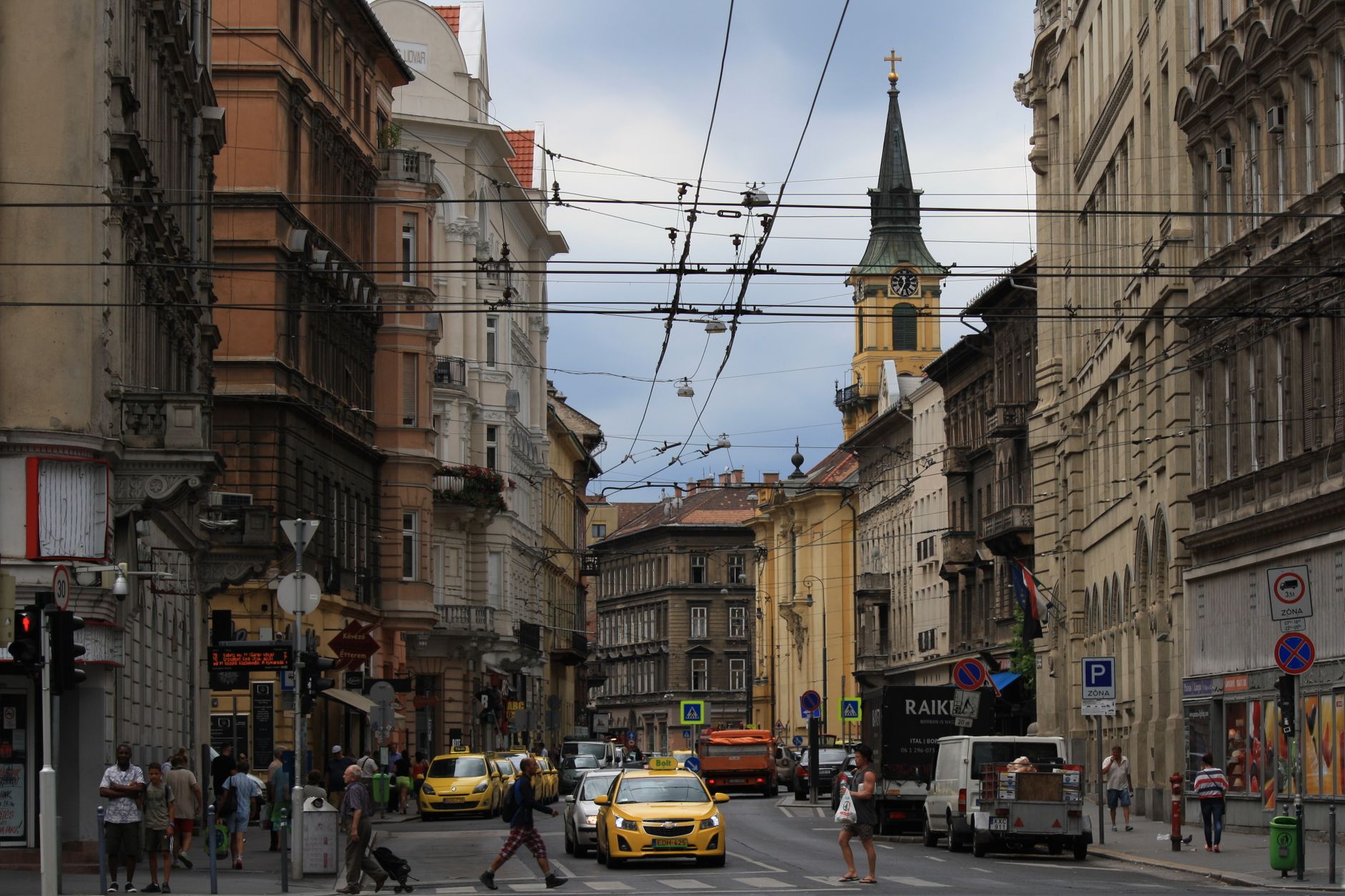
Catch your first taxi in Freiburg and the meter lights up with a number that looks oddly familiar next to Germany’s big cities, yet is built differently underneath: a 5.00 euro base fare, daytime, for up to four passengers - noticeably below Munich’s 5.90 euros, a touch above Berlin’s 4.30 euros. The per-kilometre rate then drops after just three kilometres, not seven or eight like elsewhere. Behind that sits a taxi scene that runs on entirely different logic to the big four metropolises: one switchboard instead of several competing dispatch numbers, a licensing area that stops at the city limits rather than swallowing half a county, and fixed fares that don’t lead to a local airport but to Strasbourg, Basel and Zurich. Freiburg, after all, has no airport of its own - but the French border sits just three kilometres past the city boundary.
Base Fare, Per-Kilometre Rate and Night Tariff: The Taxi Tariff Since May 2023
The tariff currently in force is the city’s ordinance fixing taxi fares and conditions - published in the official gazette on 18 February 2023 and in effect since 1 May 2023. It replaced the previous 2018 version, and nothing in the numbers has shifted since: over three years of stability, which is unusually calm for a German city. Munich, by contrast, adjusted its tariff twice, in 2024 and again in 2025.
For the standard taxi carrying up to four passengers, the daytime rate applies weekdays from 6am to 10pm: a 5.00 euro base fare including the first metered increment, then 3.50 euros per kilometre up to the third kilometre, dropping to 2.50 euros for every kilometre after that. Waiting time or slow traffic costs 50.00 euros an hour. At night - weekdays from 10pm to 6am, plus all day on Sundays and public holidays - a separate, higher tier kicks in: a 6.50 euro base fare, 4.00 euros per kilometre for the first three, then 3.00 euros. The hourly waiting rate stays at 50.00 euros. Munich has no equivalent day/night split built into its tariff at all - as the detailed breakdown of Munich’s taxi tariff explains, there’s no night surcharge whatsoever there - whereas Freiburg genuinely recalculates after dark, not through a flat add-on but through its own per-kilometre rates.
Three worked examples for the daytime tariff, base fare plus the kilometre tiers:
- 2 km - €5.00 + 2 × €3.50 = €12.00
- 5 km - €5.00 + 3 × €3.50 + 2 × €2.50 = €20.50
- 10 km - €5.00 + 3 × €3.50 + 7 × €2.50 = €33.00
Run the same five-kilometre trip at night and you get €6.50 + 3 × €4.00 + 2 × €3.00 = €24.50 - four euros more than by day, a gap you won’t find in Frankfurt, which has run without any tiering or night surcharge since 2023, just a single flat per-kilometre rate. The metered increment itself is a uniform 10 cents across every tier in Freiburg - only the distance it takes to trigger it changes with the tariff level and the car’s speed.
Minivan Taxis, Bicycles and the Surcharge West of the A5
Once a fifth passenger climbs in, or you book a larger vehicle from the start, tier III applies by day and tier IV by night - and the ordinance’s wording is worth noting: it covers rides “from 5 passengers or on request”, so you can ask for the bigger vehicle with just four people aboard, say if you’re carrying a lot of luggage. By day that’s a 10.00 euro base fare, 4.00 euros per kilometre for the first three, then 3.00 euros; by night, 13.00 euros base, 5.00 and then 4.00 euros per kilometre. The hourly waiting rate stays at 50.00 euros across all four tiers. Wheelchair users travelling seated in their wheelchair, who cannot transfer to a normal seat, are carried in a DIN 75078-equipped vehicle at the same tier III or IV rates, regardless of how many other passengers are aboard.
One quirk barely any other German city shares is the surcharge west of the A5: a trip that both starts and ends west of the A5 motorway triggers a flat 6.00 euro add-on. Within the city, the pickup drive to you is otherwise free of charge, and the ordinance is explicit that this is the only surcharge allowed - “no further surcharges are permitted and none may be charged,” reads Section 2(3) in plain terms. The taxi switchboard itself adds a 6.00 euro bicycle-carrying charge on top, though that one sits outside the municipal ordinance as a company-set price rather than a regulated fare. Luggage and animals, by contrast, are covered by the standard fare under the ordinance and cost nothing extra - only carrying bags between the taxi and your front door counts as a separate, freely agreed porter service, which has to appear as its own line on the receipt.
Just the City Itself: Why Freiburg Has No Munich-Style Mandatory Service Area
The biggest structural difference from Munich shows up in the ordinance’s very first clause: it applies “to taxis licensed by Freiburg’s public order office, for journeys within the city of Freiburg” - the city district itself, and none of the surrounding Breisgau-Hochschwarzwald county. Munich’s mandatory service area, by contrast, stretches out to Dachau, Erding and Lake Starnberg, across five separate counties. Freiburg has nothing of the kind: as an independent city district in its own right, it is its own self-contained administrative unit, and the separate taxi operating rules likewise cover only “taxi traffic within the city district of Freiburg.”
What sounds like less coverage on paper has a useful flip side: for trips that cross the city boundary - to Emmendingen, out to the Kaiserstuhl, or on to Strasbourg - the driver is explicitly not bound to the metered fare. Section 5(2) of the operating rules permits a different price outright “for a journey beyond the city district of Freiburg.” That single clause is the legal reason Freiburg’s taxi firms quote fixed prices for the classic long-distance runs instead of just letting the meter keep counting: once you’re past the city line, the regulated tariff no longer applies anyway, and a fixed price at least gives you certainty going in.
One Switchboard Instead of Many: 21 Firms Under a Single Number
Where Munich runs two long-established, competing dispatch operations in Taxi-München eG and IsarFunk, almost everything in Freiburg goes through one number: 0761 55 55 55, run by TAXI Freiburg 55 55 55 GmbH, with a separate back office on 0761 55968-30. The switchboard is structured as a joint venture, currently pooling 21 independent member firms, from sole traders to limited companies, who share a dispatch operation that, in the company’s own words, “a small or medium-sized business couldn’t manage alone.” You can book by phone, through an online portal that feeds orders straight into dispatch, or via the “Taxi EU” app, available on Google Play, the Apple App Store and the Huawei AppGallery.
The city’s separate taxi operating rules, dating to 1990 and last amended in 2001, cover a few details that read like a smaller city’s everyday reality: taxis at official ranks must queue in order of arrival, any gap has to be closed immediately by the next car moving up, washing or repairs are banned at the rank, and engines may not idle while waiting. As a passenger you explicitly have free choice of taxi - even at a rank, you’re not obliged to take the first car in line if another one suits you better. Drivers, in turn, must keep at least 25 euros in change on hand and, on request, issue a receipt showing the distance covered, the licence plate and the company’s address. One scheme the city itself promotes is the Frauennachttaxi, a women’s night taxi: women travelling alone at night pay just 10 euros per ride on qualifying trips, reduced to 7 euros for cash payment (as of 2026) - a social provision not every German city offers in this form.
Three Kilometres From France: Fixed Fares to Strasbourg, Basel and Zurich
Freiburg sits close enough to two national borders that it shapes everyday taxi life: the French border runs about three kilometres from the city boundary, Switzerland is roughly 42 kilometres away, and Basel around 51 kilometres. The region belongs to the tri-national Upper Rhine metropolitan area, home to some six million people across three countries - a geography none of Berlin, Hamburg, Munich or Frankfurt share.
Because, as the previous section explains, trips beyond the city district aren’t tied to the meter anyway, the Freiburg switchboard publishes clear fixed prices for the obvious cross-border destinations, quoted separately for the standard taxi (up to four passengers) and the minivan taxi (up to eight), and split into day and night rates (night again running 10pm to 6am plus Sundays and public holidays):
- Strasbourg - standard €210 day / €250 night, minivan €250 day / €333 night
- EuroAirport Basel-Mulhouse - standard €150 day / €185 night, minivan €200 day / €235 night
- Zurich - standard €379 day / €450 night, minivan €450 day / €600 night
EuroAirport itself is a curiosity of the tri-border region: it sits formally on French soil near Mulhouse, yet mainly serves Basel, and travellers from Freiburg often just call it “the airport” despite crossing a border to get there. Split the fixed fare among a group and the maths shifts quickly - 150 euros divided four ways comes to 37.50 euros a head, not necessarily cheaper than the train via Basel Bad station, but it saves you the change of trains, the waiting and the suitcases.
No Airport of Its Own: EuroAirport, Stuttgart or Frankfurt
Freiburg has no commercial airport of its own - flying out means choosing between several options, none of them exactly next door: EuroAirport from the previous section, Baden-Airpark near Söllingen towards Karlsruhe, the considerably larger Stuttgart Airport, and, for intercontinental connections, Frankfurt. Fixed fares exist for these three too, standard taxi, day/night:
- Baden-Airpark Söllingen - €250 / €300
- Stuttgart - €490 / €582
- Frankfurt - €571 / €677
Minivan taxis cost correspondingly more, running to roughly €677 by day and €903 at night for Frankfurt. Some airports add a €10-20 pickup surcharge, largely to cover terminal parking fees. If your flight lands late, the switchboard charges waiting time at €12.50 per started quarter-hour - though the first 15 minutes after scheduled landing are free, a clearly stated rule you won’t find spelled out everywhere.
Whether the fixed fare is worth it depends heavily on the destination. For Frankfurt or Stuttgart, the ICE from Freiburg’s main station will usually work out cheaper for a solo traveller than the fixed-price taxi. For EuroAirport, though, where the rail link via Basel Bad station means a change of trains, or when three or four of you are travelling with luggage, the maths tips back towards the taxi fairly quickly - not least because the price is fixed in advance and doesn’t depend on a missed connection.
Uber, FreeNow and What’s Different in a Smaller City
On paper, Freiburg is well covered by the big ride-hailing apps: both Uber and FreeNow list the city among their service areas. Uber advertises the full product range there - UberX, UberXL, Uber Max, Uber Taxi, Uber Reserve for bookings up to 30 days ahead, and Uber Shuttle on selected airport routes. What matters, and holds true nationwide, is that Uber’s own Freiburg page is explicit that it “exclusively arranges your ride request with a licensed transport operator” - the company is legally a broker, not a carrier, the same principle that governs private-hire and taxi booking right across Germany.
What actually differs in practice is the size of the market behind the app. Freiburg has around 237,000 residents, the fourth-largest city in Baden-Württemberg, but nowhere near the scale of Berlin, Hamburg, Munich or even Frankfurt. With just 21 member firms under a single switchboard, the pool of licensed operators that Uber and FreeNow can draw on is structurally smaller than in the big metropolises - open the app outside the core city, or late at night, and you should expect longer waits rather than the dense availability you’d find in Berlin or Munich. Freiburg has also spent years building its reputation as a “Green City”, with a dense tram and bus network run by the VAG and one of the highest cycling shares of any German city - an everyday pattern in which the taxi is less often the default choice to begin with, so a smaller fleet is arguably a sensible fit rather than a genuine shortfall. FreeNow, for its part, mainly channels bookings to the existing licensed taxis through its app, including bookings up to four days ahead - handy if you already know your return-flight time.
Another smaller city, this time with a UNESCO old town and its own ferry link rather than proximity to France, is Lübeck, covered under taxi fares in Lübeck.
Two numbers get you through Freiburg in the end: 5.00 euros before the taxi has even pulled away, and the three-kilometre mark where the per-kilometre rate drops from 3.50 to 2.50 euros. For anything beyond the city boundary - Strasbourg, EuroAirport, Zurich, or one of the bigger German airports - it’s worth checking the switchboard’s fixed-price list before you set off, since the metered fare stops having the final word right at the city line anyway. The tariff itself hasn’t changed since May 2023; glancing at the tariff card in the vehicle still never hurts, and every figure in this article reflects the situation as of 2026.
Keep reading
Taxi & Fares
Taxi Lübeck: What a Ride Costs and Why the Travemünde Ferry Gets Billed Too
Lübeck taxi tariff 2026: a 4.10 euro base fare, tiered to 2.70 and 2.20 euros per kilometre, plus a unique ferry-and-tunnel surcharge rule for trips to Travemünde.
Jonas Reinhardt30 July 2026
Taxi & Fares
Taxi Cologne: What a Ride Costs and Why the Tariff Reaches Düsseldorf
Cologne taxi fares 2026: a €4.90 base fare, a flat €2.90 per kilometre, 60 cents a minute waiting – with worked fares to the trade fair, Cologne Bonn Airport and the rise already set for March 2027.
Jonas Reinhardt25 September 2026
Taxi & Fares
Taxi Düsseldorf: What a Ride Costs and Where the €25 Fixed Fare Applies
Düsseldorf taxi fares 2026: a €5 base fare, €2.70 per kilometre, €43 an hour waiting, a €2 airport supplement and a fixed price between the airport and the trade fair – with worked fares across the city.
Jonas Reinhardt25 September 2026
Taxi & Fares
Taxi Hanover: What the Ride Costs and Why One Tariff Reaches Past the City Limits
Hanover taxi tariff 2026: €4.50 base fare, €2.80 per kilometre, €35 an hour waiting, no night surcharge – and fixed prices bookable by app since September 2025.
Jonas Reinhardt5 August 2026
Taxi & Fares
Taxi Leipzig: What a Ride Costs Under the 2026 Tariff
Leipzig taxi fares 2026: a €4.50 base fare, €3.30 per km for the first three kilometres, then €2.40 and €2.20, €40 an hour waiting – with worked fares to the trade fair, the Red Bull Arena and Leipzig/Halle Airport.
Jonas Reinhardt25 September 2026