Taxi Munich: What the Ride Costs and How Big the Service Area Really Is
Munich prices on a tapering scale like Berlin and Hamburg, not a flat rate like Frankfurt – and locks in six statutory fixed prices for the airport, trade fair grounds and central station that hold even during Oktoberfest.

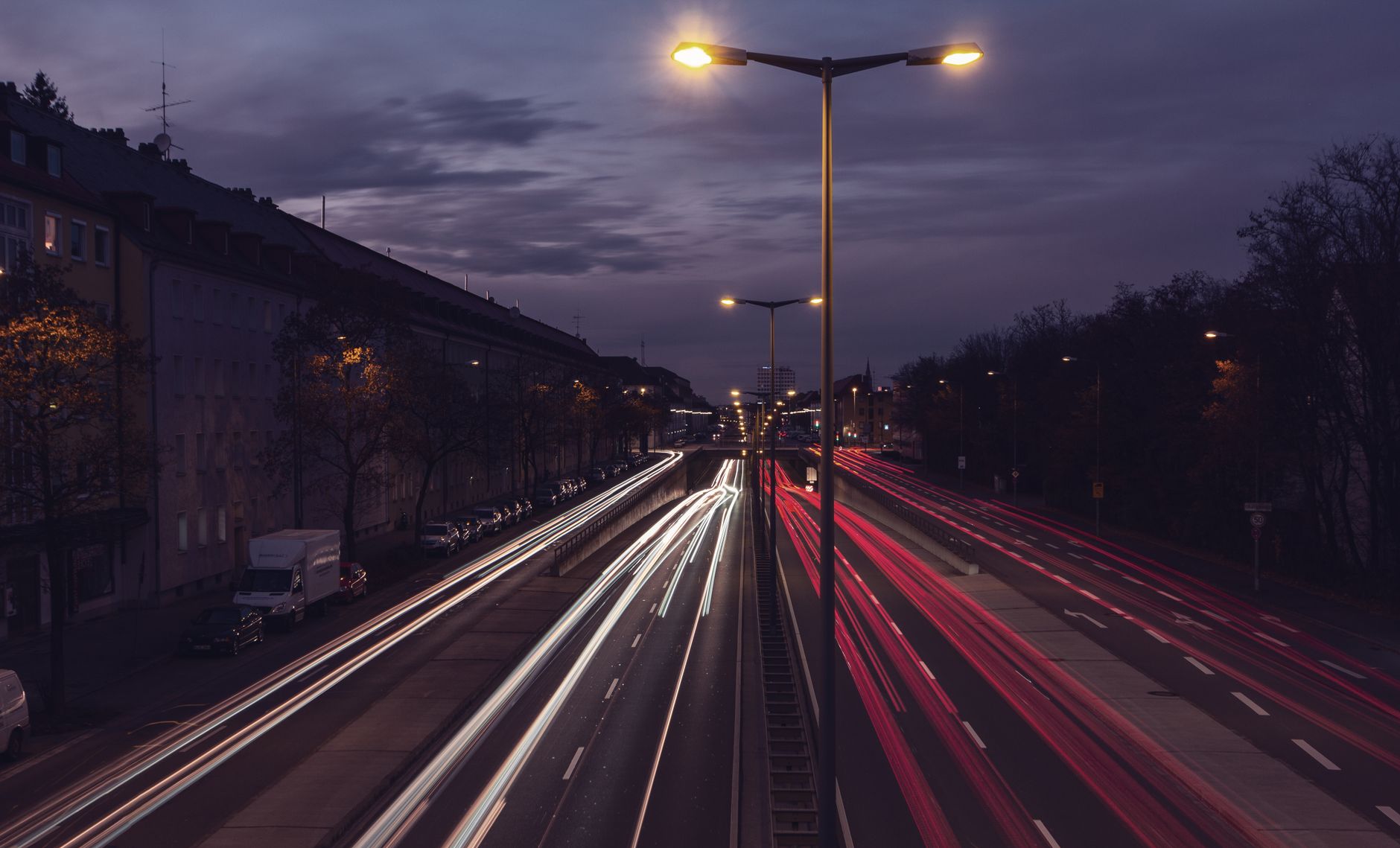
Take your first taxi in Munich and the number on the meter jumps out straight away: €5.90, before the car has even pulled away. That’s comfortably the highest minimum fare of any major German city – roughly €1.60 more than Berlin, nearly €2 more than Frankfurt. What happens next is a surprise in the other direction: Munich tapers its per-kilometre rate downward, the same way Berlin and Hamburg do, and the exact opposite of Frankfurt, which has run a single flat rate since 2023. On top of that sits a third feature barely any other German city has in this form: six fixed prices to the airport, the trade fair grounds and the central station, set by ordinance and holding regardless of traffic, Oktoberfest, or one of Munich’s big trade shows like bauma.
Base Fare, Tapered Rate and Waiting Time: The 2026 Tariff
Munich’s current taxi tariff is set out in the city’s Taxitarifordnung, last amended on 19 May 2026. The minimum fare – the base charge plus the meter’s first unit combined – comes to €5.90. From there the meter clicks forward in 20-cent steps, which works out as two distinct per-kilometre rates: up to and including seven kilometres you pay €2.70 a kilometre, and from the eighth kilometre that drops to €2.50. Sit waiting or crawl through traffic and it’s €39.00 an hour, a shade over 65 cents a minute.
That structure is the result of two fare rises the city pushed through in 2024 and 2025, officially justified by rising minimum-wage costs for taxi firms. The base fare went up first on 1 April 2024; the tapered kilometre rate now in force followed alongside a further increase to the base fare and waiting charge on 1 January 2025.
Three worked examples on the current tariff, minimum fare plus the kilometre taper:
- 3 km — €5.90 + 3 × €2.70 = €14.00
- 7 km — €5.90 + 7 × €2.70 = €24.80
- 15 km — €5.90 + 7 × €2.70 + 8 × €2.50 = €44.80
The comparison with the other big cities is unambiguous where Frankfurt’s concerned: Munich comes out dearer on every one of these distances, even though Frankfurt has run without any taper at all since 2023. The reason sits at the top end of the sum: both the minimum fare and the rate for the first seven kilometres already run higher in Munich than in Frankfurt, and the discount from kilometre eight isn’t steep enough to claw that back. Against Berlin, where the base fare is around €1.60 lower at €4.30, Munich has little chance of closing that gap over short or medium distances either – it’s only on genuinely long runs that a tapered tariff like Berlin’s typically flips the picture. Looking at how Frankfurt built its tariff – no taper at all, but a lower per-kilometre rate throughout – makes Munich’s approach a useful counter-example.
The Mandatory Service Area: From Dachau to Starnberg, in Two Tariff Zones
Munich’s mandatory taxi service area isn’t a city, it’s a region. Besides the city itself it covers the entire districts (Landkreise) of Munich, Erding, Freising, Ebersberg and Starnberg, plus the town of Dachau and the municipality of Karlsfeld, along with parts of the Fürstenfeldbruck district – specifically everything south-east of route B471, plus the towns of Schöngeising, Grafrath, Fürstenfeldbruck, Emmering and Olching where they sit cut off from that road and north-west of it. In practice that means a taxi is legally obliged to take you almost anywhere between the Starnberger See and Erding, and the same statutory tariff applies the whole way.
Within that large area the Taxitarifordnung further splits things into two tariff zones. Zone I is the city of Munich itself – plus, and this is the part few people expect, the entire grounds of Munich Airport, even though the airport sits geographically inside the Freising district, a good 35 kilometres from the city centre. Zone II is everything else: all five districts, Dachau, Karlsfeld and the Fürstenfeldbruck corner. The difference mainly affects the approach drive: order a taxi within Munich or to the airport and the empty run to reach you is free. Order one to Dachau, Erding or Starnberg, though, and the approach from the Zone I boundary gets billed at the normal per-kilometre rate – a detail hardly any guide mentions, but one that shows up clearly enough on the final total.
Compared with Berlin’s taxi tariff, which is essentially confined to the city area, Munich’s mandatory service area is not just bigger but internally more differentiated too.
Six Routes, Six Fixed Prices: Airport, Trade Fair and Central Station
What sets Munich apart from every other German city is its six fixed route prices, written directly into the Taxitarifordnung – not an app’s suggestion, but a binding price that, in the ordinance’s own words, applies “at any time and regardless of events or trade fairs”:
- Munich Airport ↔ Trade Fair (Messe) zone: €90.00
- Munich Airport ↔ Central Station zone: €96.00
- Trade Fair zone ↔ Central Station zone: €41.00
Each way, each exactly the same price. The “Trade Fair zone” and “Central Station zone” aren’t vague descriptions either – the ordinance defines them down to the street, mapped precisely: the trade fair zone runs from Olof-Palme-Straße in the west to De-Gasperi-Bogen in the east, the central station zone from Wredestraße to Sonnenstraße and Karlsplatz.
The real point of these six prices is that they hold no matter what’s happening in Munich that day. If bauma, IAA Mobility or one of the other big trade fairs is on and the roads around the Messe are gridlocked, you still pay €41 to the central station – not more, just because the driver spent an hour stuck in traffic. Billed by the meter with waiting time added, a trip like that could get expensive fast in heavy congestion. The only condition is that the driver takes the direct route; choose a detour or an extra stop along the way and the normal metered tariff applies instead. And the surcharges covered in the next section – large vehicles, bikes – still get added on top where they apply.
The Tariff Corridor: A Fixed Price for Every Other Pre-Booked Ride
For every other pre-booked journey with an agreed pickup and drop-off point, Munich has run a tariff corridor under § 2a of the Taxitarifordnung since September 2023. Book by phone or app and the operator can quote you a fixed price that, per the ordinance, may deviate “by at most 30 per cent upward and 10 per cent downward” from the standard metered fare. You’re entitled to written confirmation of the price, date and any surcharges before the ride starts – typically through the app or by text – and the trip still gets logged on the meter from the outset regardless.
Worked out for a 12-kilometre journey: on the meter you’d land at €5.90 + 7 × €2.70 + 5 × €2.50 = €37.30. The corridor allows fixed prices from roughly €33.57 at the low end to €48.49 at the top. Unlike Frankfurt, where the fixed price runs on its own separate per-kilometre band of €2.40 to €4.00 with no base fare at all, Munich sticks with the familiar starting point: the regular metered fare, with only the margin above or below it capped.
In practice a quick mental comparison before you agree is worth doing mainly when you already have a rough sense of what the metered fare would be – on a clear run the meter is almost always cheaper, but if you’re expecting heavy traffic, a fixed price at the top of the corridor can still work out better, because you’re not paying for every extra minute stuck in it.
Large Vehicles, Bikes and What Else Costs Extra
Munich’s list of surcharges is short but has a few quirks. Wheelchairs, pushchairs, walking aids and ordinary hand or travel luggage are entirely free, covered by the duty to carry. Bicycles, on the other hand, carry a flat surcharge of €7.50 – whether you’re bringing one or several. Bulky items such as furniture, large appliances, surfboards or skis, anything over 120cm in any dimension, get priced freely with the driver before you set off based on the effort involved; there’s no set rate for those.
Once a fifth passenger climbs in, the large-vehicle surcharge kicks in: a flat €10.00, whether the final count is five or eight people, and whether you’re paying by the meter, one of the fixed route prices or the tariff corridor – it gets added regardless, except when the bicycle surcharge already applies. The ordinance sets no overall cap on the total of all surcharges, though in practice that rarely becomes an issue, since only this short, clearly defined list actually attracts one.
One thing that runs differently here than in Frankfurt: the card-payment rule only requires at least three common credit or debit card types, not four. There’s no night surcharge, as in most German cities. If the meter genuinely fails, the fare is calculated by distance at the Tarifstufe 1 rate, and you can’t be charged for any waiting under five minutes at all.
To the Airport: 35 Kilometres, S-Bahn or Taxi
Munich Airport sits a good 35 kilometres from the centre – more than double the distance most other German city airports keep from downtown. By road via the A9 the drive takes anywhere from 35 to 50 minutes depending on traffic. Because the airport falls inside Tariff Zone I, none of the Zone II surcharges apply to a trip there; instead you’re looking at either the standard tariff or, far more predictable, one of the two fixed route prices from the earlier section: €96 to or from the central station, €90 to or from the trade fair grounds. On the meter, a clear-run 35-kilometre trip works out at roughly €5.90 + 7 × €2.70 + 28 × €2.50 = €94.80 – almost exactly the fixed price to the central station, just without the risk of A9 traffic pushing the final bill higher.
The public-transport alternative is the S1 and S8 S-Bahn lines, each running every 20 minutes – so a train roughly every ten minutes between them – and taking around 40 minutes to Marienplatz or the Hauptbahnhof. A single ticket costs €15.10 (as of 2026), or €17.50 for a day ticket covering the airport and city centre together. For one traveller with light luggage, the S-Bahn is nearly always the cheaper choice. Even for three people the taxi doesn’t undercut the train: €96 against €45.30 for three single tickets, or €32.60 for the Airport-City-Day group ticket (as of 2026). What the premium buys is door-to-door comfort with suitcases and no changing trains at the Hauptbahnhof – and with heavy luggage or late at night, that can be worth it. Every route from the airport into town, priced side by side and including the Lufthansa Express Bus and the stripe-ticket trick, is set out in Munich airport transfer.
Getting a Taxi: Dispatch, App or Street
The biggest dispatch centre is Taxi-München eG, founded in 1917 and, with more than 3,000 affiliated vehicles, the largest taxi dispatcher in Germany – bigger even than Frankfurt’s, which runs around 1,400 cars. It’s reachable around the clock on 089 21610, through its app, or by flagging a car down. Alongside it, IsarFunk runs a second, equally long-established dispatch centre, on 089 450540, with its own app that lets you choose a standard taxi, a low-emission vehicle, or go straight for a fixed price.
More than 250 official taxi ranks are spread across the city, and at spots like the Hauptbahnhof, Marienplatz, the airport or the trade fair grounds you’ll find a taxi waiting without booking ahead at almost any hour. Because the duty to carry applies across the whole mandatory service area, you can simply flag down a moving taxi on the street too – though Munich, unlike Berlin, has no separate, cheaper short-hop rate for that. Two kilometres hailed on the street costs exactly what two kilometres from a rank does.
Uber, FreeNow and What Actually Separates Them From a Taxi
FreeNow, which started out as mytaxi, has been dispatching taxi rides in Munich for 15 years and has organised more than 112 million kilometres for Munich taxi firms in that time – the equivalent of 146 return trips to the Moon. Back in 2011 only one ride in four was paid cashless; today it’s nearly nine in ten, and the share of electric taxis has climbed from 0.4 to more than 10 per cent over the same period. Most trips, for what it’s worth, start around Königsplatz in the Maxvorstadt district, with the area around the Hauptbahnhof the most common destination.
Uber works differently in Munich than most people expect. Rather than operating purely as a private-hire broker, it’s partnered directly with genuine taxi firms since September 2023, showing you a fixed price through the tariff corridor from the earlier section before you confirm. Around 500,000 rides have been dispatched this way since launch, with volume rising tenfold from 2023 to 2024 alone. Outside that taxi partnership, the usual rule still applies: Uber, Bolt and pure private-hire apps aren’t legally taxis, aren’t bound to any fixed tariff, and can’t be hailed on the street – what that means in practice, including the duty to return to base and the taxi’s own duty to carry, is covered under Taxi Fares in Germany.
For you as a passenger, that means tapping “Taxi” in the Uber app in Munich often gets you a genuine, licensed local taxi at a price fixed in advance – a hybrid that doesn’t exist in this form in every German city.
A considerably smaller city with no official mandatory service area, but real fixed fares across the border, is Freiburg, covered under taxi fares in Freiburg.
Another city with basin-city geography rather than a Munich-style fare-corridor system is Stuttgart, covered under taxi fares in Stuttgart.
How this Munich tariff scales up over a fifty-kilometre ride, compared with three other cities, is covered under taxi cost for 50km in Germany.
If you’re after becoming a taxi driver yourself rather than booking a ride, the cost and process of the P-Schein are covered under taxi licence cost in Germany.
Two figures are enough to get by on in Munich: €5.90 before the taxi has even set off, and a per-kilometre rate that drops from €2.70 to €2.50 once you’re past the seventh kilometre. For anything beyond that – the airport, the trade fair grounds, the central station, or the wide mandatory area stretching out to Dachau and Starnberg – it’s worth weighing the six fixed prices and the tariff corridor before you say yes. The Taxitarifordnung gets updated by city ordinance, most recently in May 2026, so it doesn’t shift week to week, but a glance at the tariff notice inside the vehicle is still no bad habit. Every figure in this article is as of 2026.
Keep reading
Taxi & Fares
Uber Prices in Germany: Base Fare, Per-Kilometre Rate, Minimum Fare
What UberX actually costs in Germany in 2026: base fare and per-kilometre rate in Berlin, Hamburg and Munich compared, surge pricing explained, and when the taxi tariff wins.
Jonas Reinhardt15 August 2026
Taxi & Fares
Taxi Hanover: What the Ride Costs and Why One Tariff Reaches Past the City Limits
Hanover taxi tariff 2026: €4.50 base fare, €2.80 per kilometre, €35 an hour waiting, no night surcharge – and fixed prices bookable by app since September 2025.
Jonas Reinhardt5 August 2026
Taxi & Fares
Taxi Cologne: What a Ride Costs and Why the Tariff Reaches Düsseldorf
Cologne taxi fares 2026: a €4.90 base fare, a flat €2.90 per kilometre, 60 cents a minute waiting – with worked fares to the trade fair, Cologne Bonn Airport and the rise already set for March 2027.
Jonas Reinhardt25 September 2026
Taxi & Fares
Taxi Düsseldorf: What a Ride Costs and Where the €25 Fixed Fare Applies
Düsseldorf taxi fares 2026: a €5 base fare, €2.70 per kilometre, €43 an hour waiting, a €2 airport supplement and a fixed price between the airport and the trade fair – with worked fares across the city.
Jonas Reinhardt25 September 2026
Taxi & Fares
Taxi Nuremberg: the Tariff Since June 2026 and What Rides Really Cost
Nuremberg taxi fares 2026: a €4.90 minimum fare, €5.10 for the first kilometre, then €2.70 and €2.20, €40 an hour waiting time – with worked fares to the trade fair, the airport and the Documentation Centre.
Jonas Reinhardt25 September 2026